

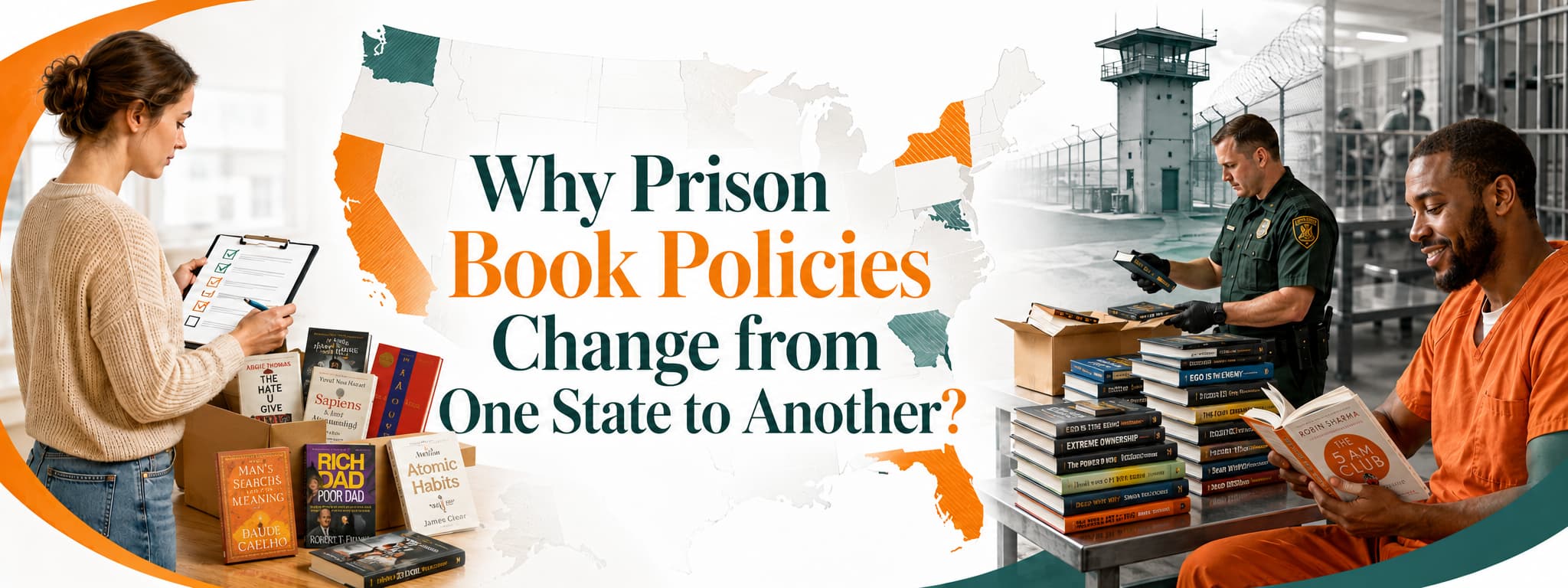

Sending books to inmates is one of the most effective ways to support education, rehabilitation, and mental well-being in correctional facilities. However, families often encounter confusion because prison book policies vary from state to state. Understanding why these differences exist is crucial to ensuring that books reach inmates safely and comply with facility regulations.
This guide from Prison Book Policies explains why policies and prison regulations differ across states, the factors influencing these rules, and best practices for families sending books to inmates.
State-Specific Regulations and Guidelines
Each state’s Department of Corrections establishes its own policies governing inmate mail and reading materials. Key reasons for variation include:
- Security Levels: Maximum-security facilities may have stricter rules than minimum-security or reentry centers.
- Population Size: States with large inmate populations often implement stricter mailing and book rules to maintain order.
- Legal Requirements: Some states have legislation that dictates what content is allowed in prison mail.
- Administrative Policies: Each correctional facility may set its own guidelines within state regulations, leading to differences.
Because of these factors, books acceptable in one state may be rejected in another, making it essential to verify state-specific prison book policies before sending books.
Security Concerns Driving Policy Differences
Security is the primary reason why prison book policies vary:
- Contraband Prevention: Some states allow books only from approved vendors to prevent smuggling of drugs, weapons, or unauthorized notes.
- Inspection Protocols: Mailroom procedures may differ, influencing what types of books can be accepted.
- High-Risk Facilities: Maximum-security prisons have stricter rules regarding content and packaging.
Understanding state-specific security protocols helps families select books that comply with facility standards and prison book policies.
Content Restrictions Across States
Different states have varying content restrictions for inmate reading materials:
- Violence and Gang-Related Content: Some states allow certain recreational books, while others prohibit anything depicting gangs or criminal activity.
- Sexually Explicit Material: Policies regarding explicit content differ widely from state to state.
- Religious and Educational Texts: Certain states may require approved editions or limit religious material to facility-provided texts.
Families should always consult the facility or vendor to ensure compliance with state-specific prison book policies.

Format and Packaging Differences
Policies also differ regarding the physical characteristics of books:
- Paperback vs Hardcover: Most states prefer paperback books for safety and ease of inspection.
- Package Size and Weight Limits: Some states have strict limitations on how many books or how large a package can be sent.
- Multiple Books per Shipment: Some states allow multiple books, while others restrict shipments to a single book per package.
Understanding these format requirements is essential to avoid rejected shipments and stay aligned with prison book policies.
Approved Vendors and State Rules
Most states require books to come from approved vendors:
- Vendors familiar with prison book policies know the rules for each state and facility.
- Using approved vendors reduces the risk of rejected books, delays, or returned shipments.
- Examples of trusted vendors include SureShot Books, Corrections BookStore, and state-specific correctional bookstores.
Approved vendors streamline the process and ensure compliance with state-specific prison book policies.
Practical Tips for Families Sending Books
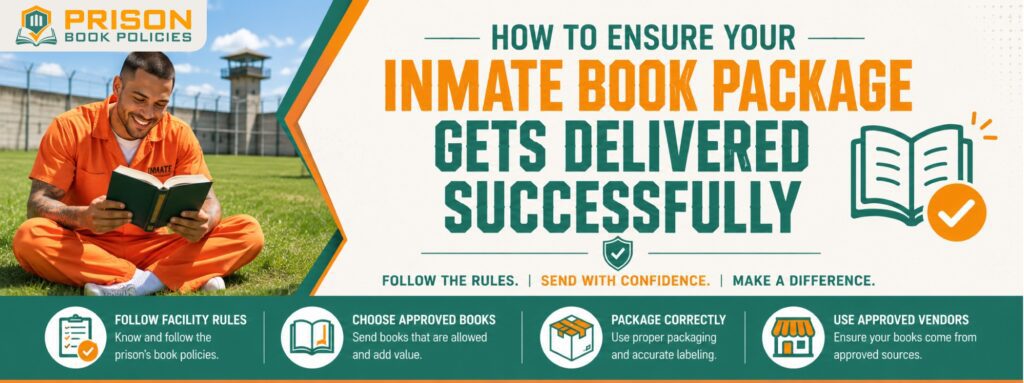
To navigate differences in prison book policies, families should follow these steps:
1. Verify State-Specific Rules
- Check the Department of Corrections website for the state where the inmate is located.
- Confirm approved vendors, content restrictions, and shipment limits related to prison book policies.
2. Use Approved Vendors
- Ordering through recognized vendors such as SureShot Books Publishing LLC or Corrections BookStore ensures compliance with local policies.
- Vendors manage packaging, labeling, and shipping to meet state requirements and prison book policies.
3. Confirm Inmate Information
- Include the inmate’s full legal name, ID number, and correct facility address.
- Accurate information prevents delays or rejection.
4. Choose Compliant Books
- Stick to approved educational, religious, and recreational materials.
- Avoid prohibited content or formats that vary by state and prison book policies.
5. Proper Packaging
- Use sturdy packaging that protects books during inspection.
- Remove unauthorized inserts such as letters, gift cards, or notes.
6. Track Shipments
- Tracking provides confirmation that the books reached the mailroom and allows families to follow up if needed.
Common State Variations in Prison Book Policies
While policies differ widely, common variations include:
- California: Typically allows paperback books from approved vendors; hardcovers limited to educational or religious texts.
- Texas: Only books from recognized vendors; strict content restrictions and size limits.
- New Jersey: Allows multiple paperback books; magazines may require vendor approval.
- Indiana: Paperbacks preferred; hardcover books limited; personal letters often prohibited.
- South Carolina: Strong emphasis on approved vendors; hardcovers and inserts heavily restricted.
Families must check each facility’s website or contact the mailroom for updated rules to avoid rejected books and ensure compliance with prison book policies.
Role of Prison Book Policies
At Prison Book Policies, we help families navigate the complex landscape of state-specific prison book policies:
- Updated Guidelines: Facility-specific rules for sending books and publications.
- Approved Vendor Lists: Trusted sources for compliant shipments.
- Mailing Tips: Best practices to avoid rejected books and delays.
- Content Guidance: Recommendations for acceptable genres and prohibited materials.
- Educational Resources: Guidance on books supporting literacy, vocational skills, and personal growth.
Using these resources helps families send books confidently, knowing they meet state and facility requirements and prison book policies.
Why Understanding State Differences Matters
- Ensures books reach inmates without rejection or delay.
- Supports education, rehabilitation, and mental well-being.
- Prevents wasted time, money, and frustration.
- Helps families stay compliant with prison book policies and facility regulations.
By understanding state differences, families can make informed decisions and support inmates effectively.
Contact Prison Book Policies
If you have any queries related to prison book regulations or about our services, feel free to contact us at:
- Phone Number: +1 (845) 996-9638
- Email: prisonbookspolicies@gmail.com
We’re here to serve you.
Final Thoughts
Prison book policies vary from state to state due to differences in security, population, legal regulations, and facility management. Understanding these differences is crucial when sending books to inmates. Families should verify state-specific rules, use approved vendors, choose compliant books, and package shipments correctly.
At Prison Book Policies, we provide resources, vendor lists, and practical guidance to help families navigate these rules and ensure that books are delivered safely. Following these recommendations ensures that inmates have access to educational and recreational materials that support personal growth and rehabilitation while following prison regulations.
