

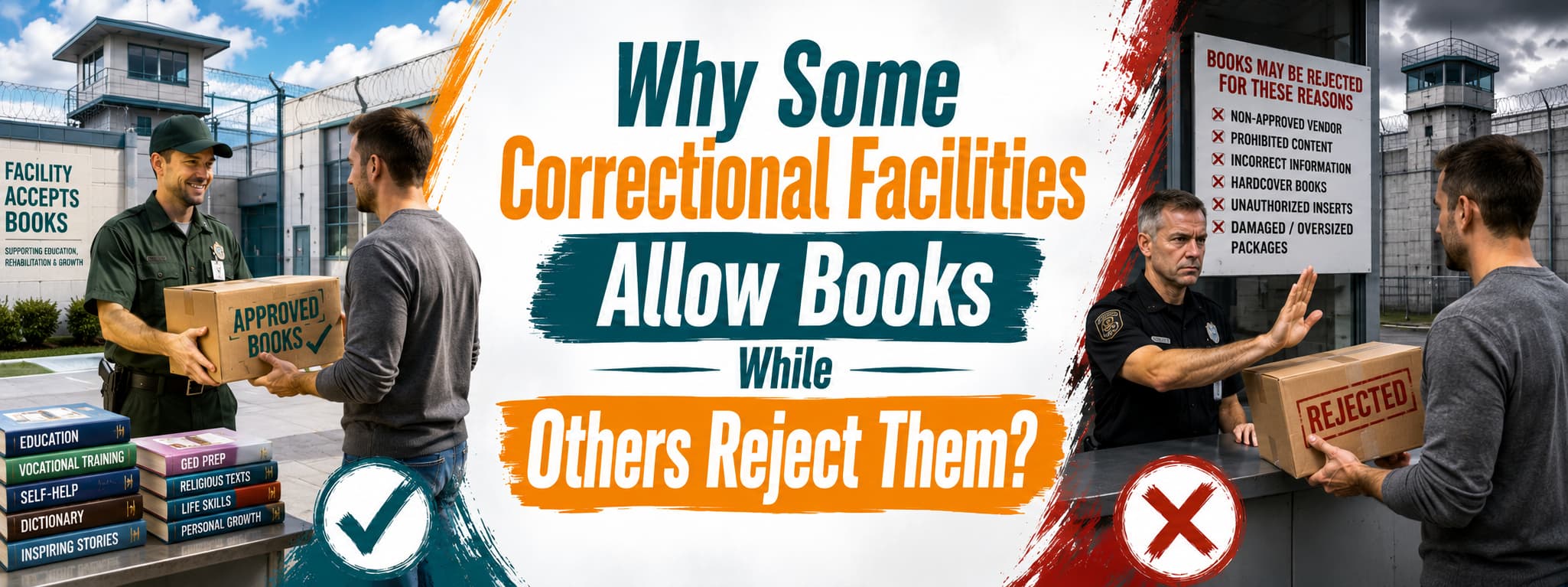

Sending books to inmates is a valuable way for families and friends to support education, personal growth, and mental well-being. However, not all correctional facilities treat incoming books the same. While some allow inmates to receive books freely, others reject them or impose strict restrictions. Understanding why these differences exist across correctional facilities can help families navigate the rules and ensure their packages reach inmates safely.
This guide explains the factors influencing book policies, the types of books allowed, and practical tips to comply with these rules in different correctional facilities.
Why Correctional Facilities Have Different Policies
Correctional facilities vary in their approach to inmate mail and reading materials due to several key factors:
1. Security Concerns
- Books can be used to hide contraband such as drugs, weapons, or unauthorized notes.
- Some facilities have stricter inspections due to security risks.
- Facilities with higher-security levels often reject books to minimize potential threats in correctional facilities.
2. Inmate Population and Facility Type
- Maximum-security prisons usually have stricter policies than minimum-security or reentry centers.
- Juvenile facilities may allow books that support education but limit recreational reading.
- Female and male correctional facilities may also have different content restrictions based on safety and behavioral considerations.
3. Administrative Policies
- Each facility’s administration sets rules for incoming books to maintain consistency and control.
- Policies can be influenced by historical incidents, staffing, and state regulations.
- Some correctional facilities allow books from approved vendors only, while others permit personal shipments.
4. Legal and Liability Considerations
- Facilities must avoid legal issues arising from inappropriate content.
- Books with graphic violence, gang references, or explicit material may be restricted.
- Policies protect the facility and staff from potential harm caused by prohibited content in correctional facilities.
Common Reasons Books Are Rejected
Understanding why books may be rejected can help families avoid delays and frustration:
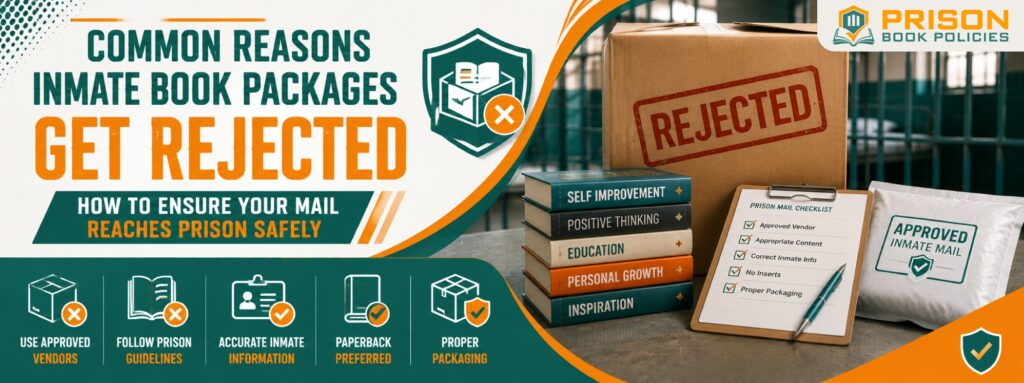
- Non-approved vendors: Packages from unrecognized sources are often rejected.
- Incorrect inmate information: Missing or inaccurate name, ID number, or housing unit.
- Prohibited content: Explicit, violent, or gang-related material is not allowed.
- Hardcover books: Some facilities only accept paperbacks.
- Unauthorized inserts: Letters, stickers, or notes can cause rejection.
- Damaged or oversized packages: Books must meet facility size and condition requirements.
Books Typically Allowed in Correctional Facilities
Facilities that accept books often allow the following types:
- Educational books: GED prep, vocational training, and textbooks.
- Religious books: Bibles, Qurans, and approved religious texts.
- Self-help books: Personal growth, mental health, and life skills.
- General fiction and nonfiction: Paperbacks without explicit content.
- Dictionaries and language books: For literacy and learning purposes.
Factors Families Should Consider Before Sending Books
To ensure packages reach inmates, consider these points:
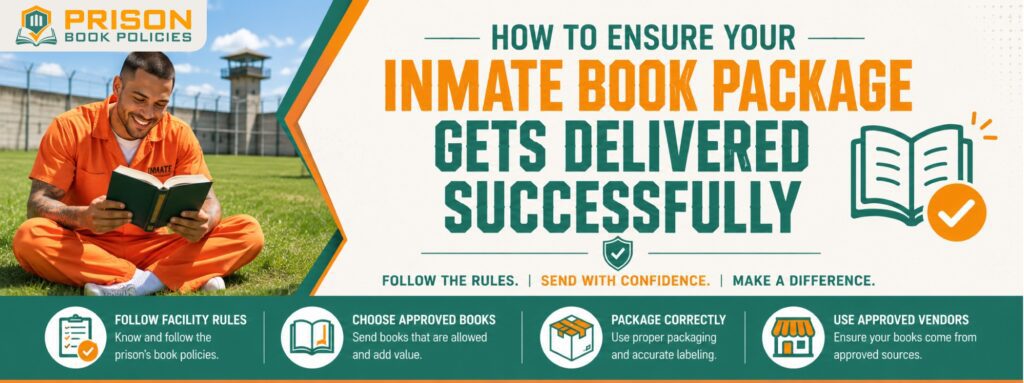
1. Approved Vendors
- Always use recognized vendors approved by the facility.
- Vendors like SureShot Books, Corrections BookStore, and state-specific bookstores provide compliant shipments to correctional facilities.
2. Facility-Specific Rules
- Check the facility’s website or call for updated mail and book policies.
- Some correctional facilities provide specific lists of approved book genres or publishers.
3. Proper Packaging and Labeling
- Use sturdy packaging that can withstand inspections.
- Include the inmate’s full name, ID number, and facility address.
- Avoid personal notes or unauthorized items in the package.
4. Book Format
- Paperbacks are generally preferred due to safety and inspection ease.
- Hardcovers may be allowed only for educational or religious purposes.
5. Shipping Timing
- Order books well in advance to account for mailroom inspections and delivery schedules.
- Track packages whenever possible to monitor delivery progress.
Services and Resources from Prison Book Policies
At Prison Book Policies, we provide families and friends with comprehensive resources to navigate correctional facilities mail rules:
- Updated Guidelines: Facility-specific policies for sending books and publications.
- Approved Vendor Lists: Trusted vendors for safe and compliant book shipments.
- Mailing Tips: Best practices for packaging, labeling, and avoiding rejected packages.
- Educational Resources: Information on books allowed for GED prep, vocational training, and personal development.
- Security Compliance: Guidance on prohibited content and formats to meet facility requirements.
These services help families ensure their book packages reach inmates efficiently and without issues in correctional facilities.
Contact Prison Book Policies
If you have any queries related to prison book regulations or about our services, feel free to contact us at:
- Phone Number: +1 (845) 996-9638
- Email: prisonbookspolicies@gmail.com
We’re here to serve you.
Final Thoughts
The differences in how correctional facilities handle books are primarily driven by security, population type, administrative policy, and legal considerations. Some correctional facilities allow a wide range of reading materials, while others impose strict restrictions to maintain safety. Families can maximize the chances of successful delivery by using approved vendors, verifying inmate information, and adhering to facility rules.
Correctional facilities may vary, but with proper preparation and knowledge, sending books can be a meaningful way to support an inmate’s education, personal growth, and rehabilitation. Resources like Prison Book Policies make it easier for families to navigate these rules and provide positive reading experiences for inmates.
