


Sending books to inmates is a valuable way to provide education, support, and personal development opportunities. Books can offer inmates a chance to improve their literacy, broaden their knowledge, and connect with the outside world. However, when learning how to send books to inmates, it’s crucial to understand the strict regulations that vary between different facilities. Failure to follow these regulations can result in your shipment being rejected or delayed. This guide by Prison Book Policies will walk you through the necessary steps to ensure that your shipment complies with prison book policies, increasing the likelihood that your books will reach the inmate successfully. 1. Know the Facility-Specific Rules One of the first things you need to understand when you plan to send books to inmates is that every correctional facility has its own set of rules. State prisons, county jails, federal institutions, and private detention centers each have different policies regarding books. This includes rules about: Before you send books to inmates, it’s crucial to check the specific prison’s policies to ensure compliance. Each facility may have unique regulations that must be followed. 2. Choose an Approved Vendor Many prisons and jails only accept books sent from approved vendors. This is an essential part of understanding how to send books to inmates. Books mailed from unauthorized vendors or directly from individuals may be rejected. Approved vendors typically include: By using an approved vendor like SureShot Books Publishing LLC, families and friends can ensure that the book shipment complies with the facility’s rules and regulations. Our platform is specialized to send books to inmates and navigating complex prison book policies. Similarly, state-focused stores like: work to align shipments with state-specific prison book policies and correctional mailroom requirements. Approved vendor compliance often includes: Using approved vendors reduces the likelihood of rejection and helps ensure books reach inmates successfully. 3. Understand Paperback vs. Hardcover Policies Another critical element of how to send books to inmates is knowing whether the facility allows paperback or hardcover books. Many correctional facilities only accept paperback books because they are easier to inspect. Hardcover books are often prohibited due to their potential to conceal contraband or other prohibited materials. Before sending books to inmates, make sure that you check whether the facility has paperback-only policies. Some prisons will allow hardcovers in limited situations, such as educational or religious materials, but it’s important to confirm beforehand. 4. Check for Content Restrictions Content restrictions are one of the most significant factors when learning how to send books to inmates. Prisons often have a list of materials that are prohibited, including: Each facility has its own list of what content is considered inappropriate. Some institutions may even restrict certain types of educational content or books with a specific focus. It’s important to verify whether the book you want to send is compliant with the facility’s policies. By understanding Prison Book Policies and checking these restrictions, you can avoid the rejection of books and ensure they are delivered to the inmate. 5. Proper Packaging and Labeling When you send books to inmates, proper packaging is key. Many correctional facilities have strict rules about how books should be packaged to prevent tampering and to ensure the security of the mail. Here are some packaging tips for compliance: Understanding how to send books to inmates also includes knowing that each prison may have specific guidelines for how the books should be addressed or shipped. 6. Know the Quantity Limits Many correctional facilities place limits on the number of books an inmate can receive. Understanding the facility’s book quantity limits is essential when you send books to inmates. If you exceed the allowed number of books, the mailroom may reject your shipment. Some facilities may allow inmates to receive a maximum of three books at a time, while others may have different limits. Make sure you confirm these restrictions before mailing multiple books to an inmate. 7. Check for Mailroom Policies Each correctional facility has its own mailroom policies, which include how incoming mail is handled, inspected, and delivered to inmates. It’s important to familiarize yourself with these policies to ensure smooth delivery. Some facilities allow books to be sent directly to an inmate’s housing unit, while others require all incoming mail to go through a central mailroom. If you’re unsure, you can always reach out to the facility’s mailroom for clarification. When you send books to inmates, following the correct mailroom procedures is just as important as meeting other regulatory requirements. 8. Use Book Policy Guard for Compliance To make the process easier, we recommend using Book Policy Guard, a tool designed to help you understand the requirements of each correctional facility. By using Book Policy Guard, you can check: Using Book Policy Guard can help reduce the risk of having your book shipment rejected, saving time and effort in the process of sending books to inmates. How to use Book Policy Guard It is accessible through SureShot Books Publishing LLC website. When you add something in the cart and go to check-out page, it guides you accordingly. 9. Stay Updated on Policy Changes Correctional facilities regularly update their mail policies, so it’s crucial to stay informed about any changes. By regularly checking the prison’s website or reaching out to the mailroom, you can ensure that you’re always up-to-date on the latest regulations. Staying updated on policy changes is a key part of how to send books to inmates and ensures compliance with the facility’s current rules. Using tools like Book Policy Guard can help you stay informed of any adjustments in the mailroom guidelines. 10. Confirm Delivery Once you’ve sent books to inmates, it’s important to confirm that the inmate has received them. If there are any issues with the delivery, such as rejection or delay, contact the facility’s mailroom. They may provide you with information about why the books were not accepted, allowing you to correct the issue for future shipments. Contact Prison Book Policies If you have any queries
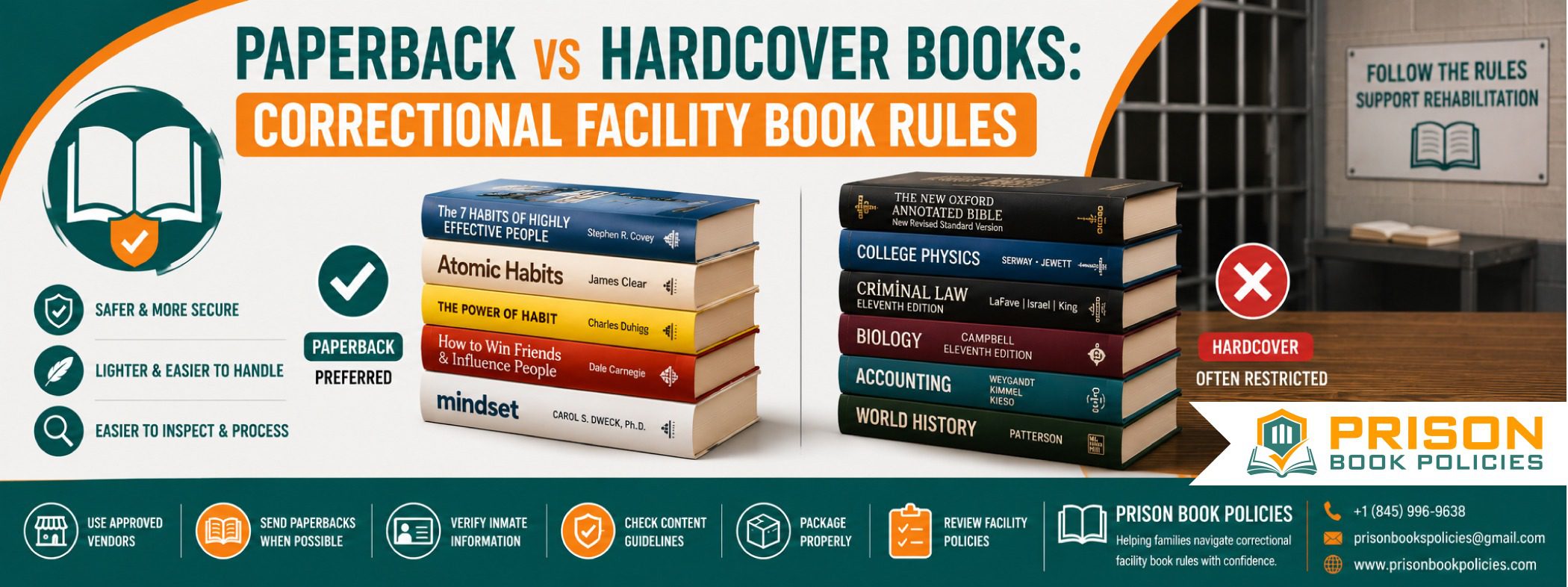
Paperback vs Hardcover Books: Correctional Facility Book Rules
Sending books to incarcerated loved ones can provide education, entertainment, and emotional support. However, understanding correctional facility book rules is essential to ensure that books reach inmates safely and are not rejected by prison mailrooms. One of the most common questions families ask is whether they should send paperback or hardcover books. The answer depends on the security policies of each correctional facility. At Prison Book Policies, we help families, friends, and approved vendors understand prison mailing regulations across the United States. Our platform provides updated information about inmate mail policies, approved book vendors, publication restrictions, and correctional facility book rules to make the process easier and safer for everyone involved. This guide explains the differences between paperback and hardcover books, why facilities enforce these rules, and how to comply with correctional facility book rules. Understanding Correctional Facility Book Rules Correctional facility book rules are designed to maintain safety, security, and operational efficiency inside prisons and jails. These correctional facility book rules regulate: Following these rules is critical for ensuring that books reach inmates without being rejected or returned. At Prison Book Policies, we regularly monitor correctional facility book rules and provide guidance to help families avoid common mailing mistakes. Paperback vs Hardcover: What Facilities Prefer Most correctional facilities prefer paperback books over hardcover books for several important reasons outlined in correctional facility book rules: 1. Security Concerns Hardcover books can sometimes be altered or hollowed out to hide contraband such as weapons, drugs, or unauthorized notes. Paperback books are more difficult to modify in this way, making them safer for correctional environments. 2. Weight and Size Paperbacks are lighter and easier for prison mailrooms to inspect, process, and store. Large hardcover books may exceed facility weight or size restrictions established under correctional facility book rules. 3. Safety During Inspection Paperback books are flexible and less likely to cause injury during inspections. Hardcover books, because of their rigid covers and bindings, may pose safety concerns for correctional staff. Because of these concerns, many correctional facility book rules specifically prohibit hardcover books unless exceptions are granted for educational or religious purposes. When Hardcover Books Might Be Allowed Although paperback books are generally preferred, some facilities may allow hardcover books under limited circumstances according to correctional facility book rules, including: Even when hardcover books are permitted, they must still comply with all facility packaging, vendor, and content requirements. Before placing an order, families should always review the facility’s latest correctional facility book rules or consult resources like Prison Book Policies for updated guidance. Tips for Sending Books According to Facility Rules To comply with correctional facility book rules, follow these best practices: Why Following Correctional Facility Book Rules Matters Complying with correctional facility book rules helps ensure: Ignoring correctional facility book rules can result in delays, rejected shipments, or disciplinary issues related to inmate mail privileges. About Prison Book Policies Prison Book Policies is an informational resource dedicated to helping families navigate prison mailing regulations. We provide: Our goal is to simplify the process of sending books and publications to inmates while helping families stay compliant with correctional facility regulations. Contact Prison Book Policies If you have any queries related to prison book regulations or about our services, feel free to contact us at: We’re here to serve you. Final Thoughts Understanding the difference between paperback and hardcover books is crucial when sending books to inmates. Most correctional facilities prefer paperback books because they are safer, easier to inspect, and less likely to violate security policies outlined in correctional facility book rules. By following correctional facility book rules, families can improve the chances that their packages are accepted and delivered successfully. Using approved vendors, verifying inmate information, and staying informed about facility regulations are the best ways to ensure smooth delivery. At Prison Book Policies, we are committed to helping families stay informed and compliant with correctional facility book rules so inmates can continue receiving valuable educational and recreational reading materials.
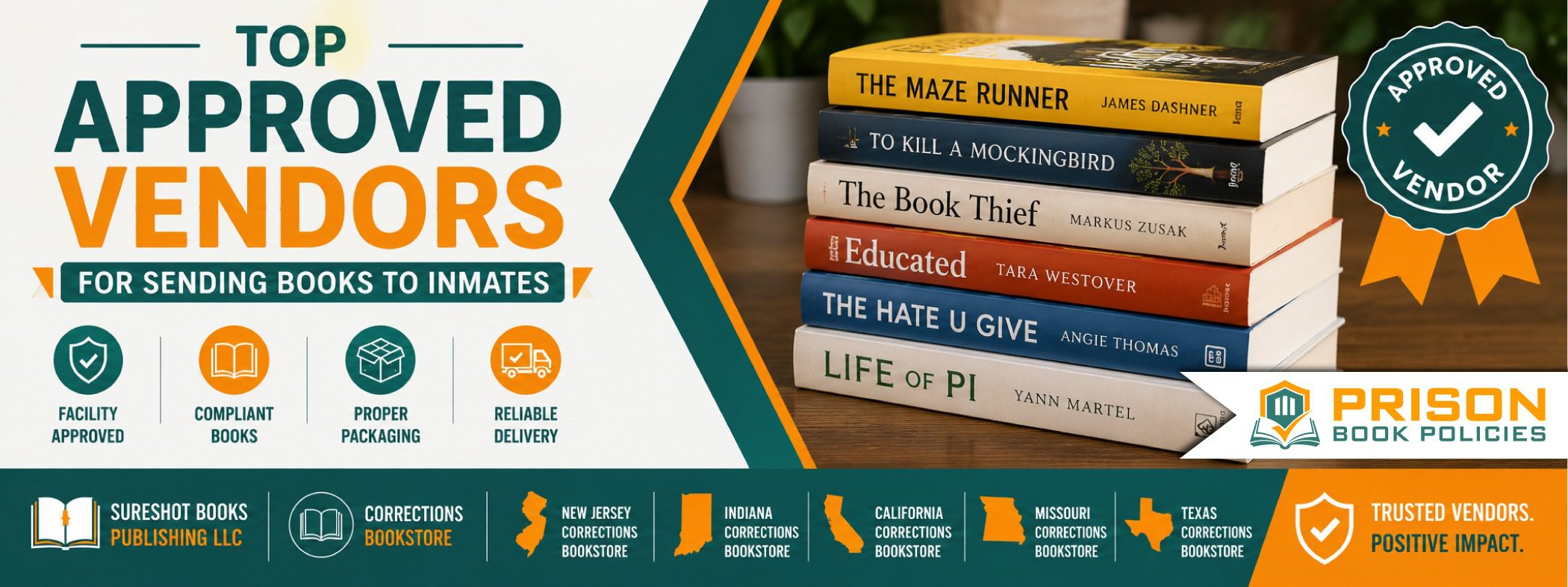
Top Approved Vendors for Sending Books to Inmates
Sending books to inmates is an important way to provide them with educational, emotional, and personal development opportunities. Books can help inmates improve their literacy, gain skills, and stay connected with the outside world. However, one crucial aspect of sending books to inmates is ensuring that you follow prison book policies, which require using top approved vendors for book shipments. In this guide by Prison Book Policies .com, we’ll highlight the Top Approved Vendors for sending books to inmates, including well-known vendors like SureShot Books Publishing LLC and Corrections BookStore, and explain why it’s essential to choose a vendor that adheres to correctional facility regulations. 1. Why Top Approved Vendors Matter Before diving into the Top Approved Vendors, it’s important to understand why using these vendors is crucial when learning how to send books to inmates. Prison and jail systems have strict rules governing the types of materials inmates can receive, and this extends to books. Top Approved Vendors are vendors that have been vetted by the correctional facilities to meet their specific mailing requirements. Using approved vendors ensures: Failure to use approved vendors can result in the rejection or delay of book shipments, wasting time and money. Using an approved vendor guarantees that the books you send are compliant with prison rules and regulations. 2. SureShot Books Publishing LLC: A Leading Approved Vendor SureShot Books Publishing LLC is one of the Top Approved Vendors recognized by correctional facilities across the nation. We specialize in providing high-quality books that adhere to Prison Book Policies and comply with each facility’s specific rules. By working with SureShot Books Publishing LLC, you ensure that the books you send meet the security requirements of correctional facilities, including: Our books are selected to support inmate rehabilitation and personal growth, providing a wide range of educational, religious, self-help, and recreational reading materials. 3. Corrections Book Store: Your Trusted Book Supplier Another Top Approved Vendor in the prison book industry is Corrections BookStore. As a trusted vendor for sending books to inmates, Corrections BookStore is known for offering books that comply with correctional policies while providing a broad selection of materials. Whether you are sending educational textbooks, religious texts, or novels, Corrections BookStore ensures that the books meet the specific needs of each facility. With our experience and dedication to compliance, Corrections BookStore guarantees: By using Corrections BookStore, you avoid the risk of having shipments returned or delayed due to non-compliance with facility-specific regulations. 4. State-Wise Stores: Local Solutions for Local Prisons In addition to national vendors like SureShot Books Publishing LLC and Corrections BookStore, many states have state-specific bookstores that are approved vendors for their correctional facilities. These state-focused stores are tailored to the particular needs and requirements of each state’s correctional system. For example: By choosing state-specific approved vendors, you ensure that the books you send to inmates meet the local prison regulations for packaging, content, and vendor approval. These local stores have in-depth knowledge of state-specific requirements, which reduces the risk of rejection or delays in processing. 5. Why Choose Approved Vendors? Choosing Top Approved Vendors is crucial for a number of reasons. When you send books to inmates, you want to ensure that your books meet the facility’s specific requirements, and using approved vendors helps to guarantee this compliance. Here are some reasons why choosing an approved vendor is essential: 5.1 Compliance with Prison Rules Each correctional facility has its own set of rules regarding book shipments. Top Approved Vendors are familiar with these rules and ensure that the books are in compliance. They understand the facility’s mailroom requirements, packaging standards, and content restrictions, so the books are less likely to be rejected. 5.2 Faster Delivery Using approved vendors who are familiar with prison mailing procedures results in faster delivery. These vendors have established systems in place to ensure that books are delivered to inmates in a timely manner. Non-approved vendors, on the other hand, may be unfamiliar with the mailing procedures, leading to potential delays. 5.3 Reduced Risk of Rejection One of the primary benefits of choosing an approved vendor is the reduced risk of having your book shipment rejected. Non-compliant books, such as those sent from unauthorized vendors, are often returned or confiscated. Approved vendors ensure that books comply with prison policies, significantly lowering the chances of rejection. 5.4 Supporting Inmate Education Approved vendors often focus on providing books that contribute to the rehabilitation and education of inmates. Many approved vendors offer educational books, self-help guides, religious texts, and legal resources that can aid in an inmate’s personal growth and reintegration into society after release. 6. How We Ensure Compliance At SureShot Books Publishing LLC, we pride ourselves on maintaining full compliance with Prison Book Policies. Our team is experienced in navigating the complexities of correctional regulations, ensuring that all books we send meet the following criteria: By choosing our services, you can be confident that the books you send will reach the inmate without complications. 7. Using Book Policy Guard to Verify Vendors One way to ensure that the vendor you are using is approved is by using Book Policy Guard. This tool allows families, bookstores, and publishers to verify whether a vendor is recognized by a specific facility. By using Book Policy Guard, you can ensure that your chosen vendor is compliant with prison regulations, thus avoiding the risk of rejection. Contact Prison Book Policies If you have any queries related to prison book regulations or about our services, feel free to contact us at: We’re here to serve you. 8. Final Thoughts on Top Approved Vendors When you send books to inmates, using a Top Approved Vendor is crucial for ensuring compliance with prison book policies. Vendors like SureShot Books Publishing LLC and Corrections BookStore, along with state-specific bookstores, offer reliable and compliant services that help inmates receive the educational and recreational materials they need. Choosing an approved vendor not only ensures compliance but also speeds up the process and reduces the likelihood of rejected shipments. By

Understanding Prison Book Policies: What You Need to Know Before Sending Books to Inmates
Sending books to incarcerated individuals can provide education, emotional support, rehabilitation opportunities, and personal growth. However, understanding prison book policies is critical before mailing any reading materials to a correctional facility. Many families and friends are surprised to learn that prisons, jails, and detention centers enforce strict regulations regarding incoming books, publications, and educational materials. Without understanding prison book policies, shipments may be rejected, delayed, or returned due to facility-specific restrictions. Every correctional institution has its own mailroom procedures, approved vendor standards, packaging rules, and content limitations that must be followed carefully. At Prison Book Policies, we help families, bookstores, and publishers better understand correctional mailing regulations so inmate book shipments have a higher chance of approval. Through compliance guidance and tools like Book Policy Guard, users can navigate changing correctional rules more confidently. Why Understanding Prison Book Policies Matters Understanding prison book policies is important because correctional facilities prioritize institutional safety and security. Mailrooms inspect all incoming books to prevent contraband, unauthorized communication, or prohibited materials from entering facilities. Even small mistakes can cause packages to be denied under prison regulations. Common problems include: By understanding prison book policies, families can avoid costly shipping issues and increase the likelihood that books reach inmates successfully. How Prison Book Policies Differ by Facility One of the biggest challenges in understanding prison book policies is that rules vary significantly between facilities. Federal prisons, state departments of corrections, county jails, and private detention centers often maintain completely different regulations. Some institutions allow educational books from approved vendors, while others limit all incoming publications. Certain facilities permit paperback books only, while others may restrict magazines, newspapers, or specific genres. Examples of differences include: Policy Category Facility Variations Paperback Requirements Mandatory in many prisons Hardcover Restrictions Often prohibited Vendor Rules Approved vendor policies vary Religious Materials Special approval may apply Educational Books Frequently encouraged Magazine Limits Quantity restrictions common Mailroom Inspections Different review standards Book Quantity Limits Facility-specific caps Understanding prison book policies means researching the exact rules for the inmate’s facility before sending any materials. Approved Vendor Requirements Many correctional institutions require books to come directly from approved vendors. Understanding prison book policies includes knowing which types of bookstores and publishers meet facility compliance standards. Approved vendor requirements exist to reduce contraband risks and maintain mailroom security procedures. As an approved vendor serving correctional facilities nationwide, SureShot Books Publishing LLC helps families send policy-compliant books that align with many institutional requirements. State-focused stores such as: also support customers by focusing on state-specific correctional guidelines and approved vendor standards. Understanding prison book policies means recognizing that many facilities reject books mailed directly from individuals instead of compliant bookstores or publishers. Paperback vs Hardcover Rules One of the most common aspects of understanding prison book policies involves knowing the difference between paperback and hardcover acceptance rules. Many prisons prohibit hardcover books because: Paperback books are generally preferred because they are easier for mailrooms to process and inspect. Before sending books, understanding prison book policies requires confirming whether the facility allows: Failing to follow these guidelines often results in rejection. Content Restrictions in Correctional Facilities Understanding prison book policies also includes recognizing that correctional institutions may restrict certain content categories. Commonly prohibited materials may include: Each facility determines its own review standards, which means a book approved at one institution may be denied elsewhere. Mailrooms evaluate content according to security policies, inmate behavior concerns, and institutional regulations. Mailroom Procedures and Book Inspections Correctional mailrooms are responsible for enforcing prison regulations and ensuring compliance with institutional standards. Understanding prison book policies requires knowing that mailroom staff review: Some facilities also inspect: Even minor packaging violations may trigger rejection. This is why understanding prison book policies before shipping is essential for successful inmate deliveries. Common Reasons Book Shipments Are Rejected Families often experience frustration because prison book policies can be strict and inconsistent. Common rejection reasons include: Understanding prison book policies helps reduce these avoidable mistakes. Many rejected shipments occur because senders assume all correctional facilities follow the same rules, which is not true. How Book Policy Guard Helps Book Policy Guard helps simplify the process of understanding prison book policies by organizing facility-specific information and correctional guidelines. Instead of searching through multiple department of corrections websites, Book Policy Guard helps users identify: Because prison regulations change frequently, staying informed is essential. Book Policy Guard supports families, bookstores, and publishers by helping reduce shipment errors and improving compliance awareness. Understanding prison book policies becomes much easier when users have access to organized correctional guidance tools. Educational Benefits of Sending Books to Inmates Despite strict regulations, many correctional institutions recognize the value of books in rehabilitation and inmate education. Books can support: Understanding prison book policies allows families to provide meaningful educational resources while remaining compliant with institutional regulations. As a correctional publishing organization, SureShot Books Publishing LLC supports educational access and correctional reading initiatives focused on inmate growth and rehabilitation. Additionally, MailCall Newspaper and MailCall Communication help incarcerated individuals maintain access to approved communication and informational resources. Challenges Families Face For many people, understanding prison book policies is difficult because: Families may struggle with: Prison Book Policies was created to help simplify these challenges by providing easier access to correctional policy guidance. The Future of Prison Book Policies As correctional systems adopt new technologies, prison book policies may continue evolving. Emerging trends include: However, physical books continue to play an important role in inmate education and rehabilitation programs nationwide. Understanding prison book policies will remain essential for families and organizations supporting incarcerated individuals. Contact Prison Book Policies If you have any queries related to prison book regulations or about our services, feel free to contact us at: We’re here to serve you. Final Thoughts on Understanding Prison Book Policies Understanding prison book policies is one of the most important steps before sending books to inmates. Every correctional facility maintains unique rules regarding approved vendors, paperback requirements, content restrictions, packaging standards, and mailroom procedures. By researching facility-specific regulations and
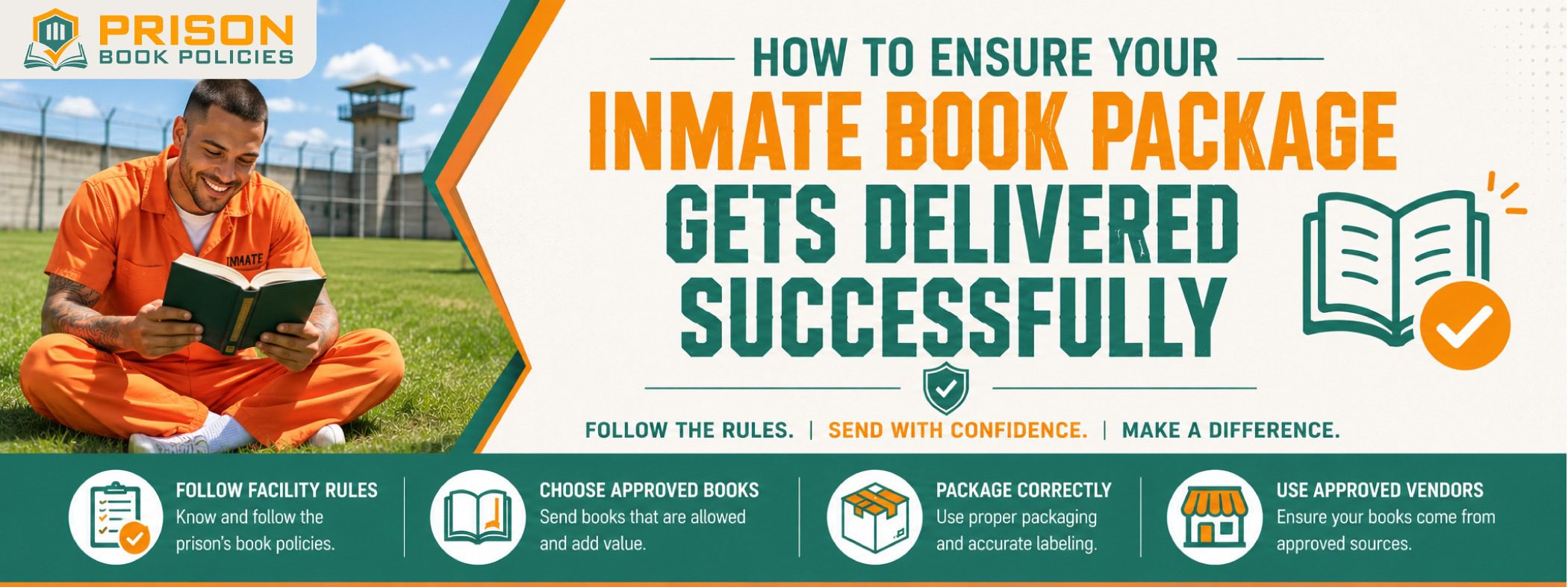
How to Ensure Your Inmate Book Package Gets Delivered Successfully
Sending an inmate book package to a loved one can be a thoughtful and supportive gesture, but ensuring that it gets delivered successfully can be more challenging than it might seem. There are numerous prison book policies that govern what can and cannot be sent to inmates, how it must be packaged, and where it must come from. Failing to follow these rules can result in your inmate book package being delayed, returned, or even rejected outright. In this guide by Prison Book Policies.com, we’ll walk you through the steps to help ensure that your inmate book package gets delivered successfully. From packaging to content compliance, we’ll cover what you need to know to avoid common pitfalls and follow the right procedures. 1. Understand the Prison’s Book Policies The first and most important step in ensuring that your inmate book package is delivered successfully is understanding the prison book policies. Each facility has its own rules and guidelines about what can be sent to inmates. Some facilities have strict rules about book content, others about how books should be packaged, and some may even have restrictions on where the books come from. Key Areas of Prison Book Policies to Review: Before mailing an inmate book package, verify the facility’s prison book policies to ensure compliance. This is crucial for preventing delays or rejections. 2. Choose Books That Comply with Facility Regulations Once you’re familiar with the facility’s rules, it’s time to select the right books for your inmate book package. Choosing books that align with the facility’s policies is essential to avoid rejection. What to Consider: Choosing the right books for your inmate book package is critical for ensuring that the books are compliant with the facility’s guidelines. 3. Ensure Proper Packaging and Labeling Proper packaging is one of the most overlooked aspects of sending an inmate book package. Many prison book policies require that books be packaged securely to prevent tampering, damage, or hidden contraband. Here’s how to properly package your books: Tips for Packaging Your Inmate Book Package: By adhering to the facility’s packaging and labeling requirements, you reduce the chances of your inmate book package being rejected. 4. Use Approved Vendors to Avoid Rejections One of the biggest reasons for inmate book package rejections is failing to use an approved vendor like SureShot Books Publishing LLC and Corrections BookStore. Many correctional facilities have a list of approved bookstores or publishers they work with, and sending books from unauthorized sources can lead to immediate rejection. Why Use Approved Vendors? At Prison Book Policies, we work with trusted approved vendors like SureShot Books Publishing LLC and Corrections BookStore, ensuring your inmate book package complies with the latest prison book policies. 5. Verify the Inmate’s Eligibility for Book Deliveries Before sending an inmate book package, check if there are any specific restrictions or eligibility requirements for receiving books. Some inmates may have limited access to books due to their classification, security level, or the type of facility they’re housed in. For example, some facilities restrict books for certain inmates based on their behavior, while others may only allow books to be sent to inmates who have earned privileges. How to Verify Eligibility: 6. Book Policy Guard: A Valuable Resource for Compliance To ensure that your inmate book package complies with all regulations, you can use Book Policy Guard, a valuable tool that helps verify whether the books you want to send meet the specific rules of the correctional facility. With Book Policy Guard, you can: By using Book Policy Guard, you can ensure that your inmate book package is fully compliant with prison book policies, increasing the chances of successful delivery. 7. How Prison Book Policies Can Help At Prison Book Policies, we assist families, friends, and bookstores by providing the latest information on prison book policies. Whether you are sending an inmate book package for the first time or looking for resources to streamline the process, we offer: We are dedicated to making the process of sending books to inmates as smooth as possible by offering expert advice, resources, and partnerships with trusted vendors. Contact Prison Book Policies If you have any queries related to prison book regulations or about our services, feel free to contact us at: We’re here to serve you. Final Thoughts on Sending an Inmate Book Package Ensuring that your inmate book package gets delivered successfully requires understanding and adhering to prison book policies. By following the correct procedures, checking facility rules, selecting appropriate books, using approved vendors, packaging correctly, and verifying eligibility, you can minimize the chances of your package being rejected. At Prison Book Policies, we provide families and friends with the tools and resources needed to send books to inmates successfully. With Book Policy Guard and our partnerships with approved vendors, you can confidently ensure that your inmate book package reaches its destination without issues.

Best Books to Send to Inmates: Top Picks for Family and Friends
Sending books to incarcerated loved ones is one of the most meaningful ways to provide support and encouragement. Books offer comfort, education, and an outlet for personal growth. However, choosing the best books to send to inmates can be tricky, especially when trying to follow prison book policies and comply with facility rules. In this guide, we’ll discuss the best books to send to inmates, offering a selection of great titles that are beneficial for incarcerated individuals and comply with common prison book policies. Whether you’re sending books to provide educational resources, emotional support, or a means of self-improvement, choosing the best books to send to inmates can make a significant impact. In this guide by Prison Book Policies.com, we’ll help you navigate the process with a list of top picks and tips on following the right prison book policies. 1. Educational Books: A Path to Learning and Growth One of the most powerful ways to support an inmate is by sending educational books. Many correctional facilities encourage inmates to pursue education, and educational books are some of the best books to send to inmates because they help build skills, prepare for exams, and contribute to a brighter future. Top Picks for Educational Books: When sending books to inmates, educational resources are among the most valuable, as they promote personal growth and prepare them for life after incarceration. 2. Self-Help Books: Encouraging Personal Growth Inmates often face challenges related to mental health, self-esteem, and coping mechanisms. Self-help books are among the best books to send to inmates because they offer tools for personal transformation, emotional healing, and resilience. Top Picks for Self-Help Books: By sending self-help books to inmates, you give them resources that can help them navigate their emotional and mental challenges, fostering resilience and personal development. 3. Religious and Spiritual Books: Providing Comfort and Guidance Religious and spiritual books are some of the best books to send to inmates, offering them comfort, hope, and guidance. Many correctional facilities allow religious texts, and these books can help inmates find strength and peace. Top Picks for Religious Books: By sending religious books to inmates, you provide a source of spiritual strength, which can be especially important in times of difficulty. 4. General Literature and Fiction: Encouraging Reflection and Escapism Fiction and general literature can be among the best books to send to inmates, as they offer a way to escape the confines of prison life. These books provide entertainment, insight into human nature, and the opportunity to reflect on life’s deeper meanings. Top Picks for General Literature and Fiction: General literature and fiction are not only entertaining but also offer valuable insights into life, morality, and human experience, making them some of the best books to send to inmates. 5. Legal and Advocacy Books: Empowering Inmates with Knowledge Many inmates are working on their legal cases and need access to legal books to understand their rights and navigate the legal system. Legal books are critical, especially for inmates representing themselves in court. Top Picks for Legal Books: Having access to legal books helps inmates empower themselves with knowledge of the law and may aid in their legal defense or efforts to appeal. 6. How to Send Books to Inmates: A Simple Guide The process of sending books to inmates is simple but must be done correctly to ensure the books are accepted. Here’s a quick guide: 7. What is Book Policy Guard? Book Policy Guard is a powerful tool that helps families and bookstores ensure their book shipments comply with prison book policies. It allows you to: By using Book Policy Guard, you can significantly reduce the risk of sending non-compliant books and ensure your loved one receives the best books to send to inmates. 8. How Prison Book Policies Can Assist You in Sending Books to Inmates At Prison Book Policies, we provide valuable resources to help families navigate the complex rules and regulations of sending books to inmates. Here’s how we can assist: By using Prison Book Policies and tools like Book Policy Guard, you can confidently send the best books to send to inmates while ensuring they meet all correctional facility regulations. Contact Prison Book Policies If you have any queries related to prison book regulations or about our services, feel free to contact us at: We’re here to serve you. Final Thoughts on the Best Books to Send to Inmates Choosing the best books to send to inmates is an important and impactful way to support a loved one. Whether you choose educational materials, self-help books, religious texts, or fiction, the right books can provide valuable tools for personal growth and rehabilitation. By adhering to prison book policies and using tools like Book Policy Guard, you can ensure that your books comply with regulations and reach the inmate without delay. At Prison Book Policies, we are dedicated to helping you navigate the complexities of sending books to inmates and ensuring that your support reaches its intended recipient. With the right resources, you can make a positive impact on your loved one’s journey toward personal growth and rehabilitation.
Federal vs. State Prison Book Policies: What’s the Difference?
When it comes to prison book policies, understanding the difference between federal and state prison regulations is crucial for ensuring that books sent to incarcerated individuals are accepted. Prison book policies can vary widely not only from state to state but also between federal and state correctional systems. These policies govern what types of books can be sent to inmates, from content restrictions to packaging requirements, and understanding them can help prevent rejected shipments and delays. In this blog by Prison Book Policies.com, we’ll explore the key differences between federal and state prison book policies and offer guidance on how to navigate these variations when sending books to inmates. Whether your loved one is in a state or federal facility, following the correct prison book policies is essential to ensure successful book deliveries. 1. Understanding the Basics of Prison Book Policies Prison book policies are the regulations established by correctional facilities to ensure that all incoming mail, especially books, complies with security protocols and facility rules. These policies are designed to: Although federal and state facilities share some common regulations, such as the prohibition of contraband and inappropriate content, the prison book policies for each system can vary significantly. 2. Federal Prison Book Policies Federal prisons are managed by the Federal Bureau of Prisons (BOP), and the prison book policies in these facilities are typically stricter than those in state prisons. Federal prisons often have more uniform regulations across the country because they are governed by national guidelines. Key Characteristics of Federal Prison Book Policies: In federal facilities, the goal is to ensure that all incoming books serve educational or rehabilitative purposes and don’t threaten the safety or security of the facility. 3. State Prison Book Policies State prisons, which are run by individual states, often have prison book policies that are more flexible than those in federal prisons. While many state facilities align with federal guidelines, there can be significant differences from one state to another. Each state has the authority to set its own rules regarding the types of books allowed, packaging requirements, and content restrictions. Key Characteristics of State Prison Book Policies: State prisons often have more room for discretion when it comes to prison book policies, meaning the same book might be accepted in one state but rejected in another. 4. Major Differences Between Federal and State Prison Book Policies While there are similarities in prison book policies across both federal and state systems, some key differences make it essential to understand the specific requirements of each type of facility. Feature Federal Prison State Prison Vendor Requirements Must come from approved vendors May allow books from approved vendors or directly from individuals Content Restrictions Stricter content rules (no violent/extremist material) Generally more lenient, though violent/extremist material is still prohibited Book Format Typically paperback only Often paperback, but some exceptions for hardcover Mailroom Inspection Highly structured, with a thorough inspection process May vary by state, but generally less stringent than federal prisons Flexibility Less flexibility in policies More flexibility between states, depending on facility rules 5. How to Navigate Federal vs. State Prison Book Policies Understanding the differences between federal and state prison book policies is crucial for successfully sending books to inmates. Here’s how to navigate these differences effectively: 5.1 Check Facility-Specific Rules Since prison book policies vary by facility, the first step in sending books to inmates is to research and understand the specific rules of the facility your loved one is housed in. Federal and state facilities may have unique requirements for: 5.2 Use Approved Vendors Both federal and state prisons often require that books come from approved vendors. Ensure that the vendor you are using is recognized by the specific facility. At Prison Book Policies, we partner with trusted approved vendors like SureShot Books Publishing LLC and Corrections BookStore that comply with both federal and state regulations. 5.3 Choose the Right Book Format Always check if the facility accepts hardcover books. Many prisons, especially federal ones, only allow paperback books. If you are unsure, it’s safer to choose paperback to avoid rejection. 5.4 Verify Content Compliance Before sending books to inmates, review the facility’s content restrictions. Avoid books that may be seen as promoting violence, extremism, or criminal behavior. Stick to educational, religious, self-help, and general literature that aligns with rehabilitative goals. 5.5 Stay Informed About Policy Changes Both federal and state prison book policies can change, so it’s important to stay updated. Regularly check with the facility’s mailroom or use tools like Book Policy Guard to ensure your book complies with the latest regulations. 6. Book Policy Guard: Ensuring Compliance To avoid the risk of having books rejected or delayed, consider using Book Policy Guard. This tool allows families, bookstores, and publishers to verify whether a book complies with the specific prison book policies of a given facility, whether federal or state. It can help ensure that your book shipment adheres to the latest content, vendor, and packaging regulations. Final Thoughts on Federal vs. State Prison Book Policies Navigating prison book policies can be complex, especially when dealing with the differences between federal and state correctional systems. Federal prisons tend to have stricter and more uniform rules, while state prisons offer more flexibility. By understanding these differences, checking facility-specific guidelines, and working with trusted approved vendors, you can ensure that the right book for inmates is successfully delivered. At Prison Book Policies, we help families and friends of incarcerated individuals navigate the maze of prison book policies. By following these guidelines and using resources like Book Policy Guard, you can be confident that your book shipments are compliant and will reach their destination without issues.
How Prison Book Policies Work: Navigating State and Facility-Specific Rules
Understanding prison book policies is essential for families, friends, publishers, and correctional bookstores that want to send books successfully to incarcerated individuals. Across the United States, prison policies vary widely between state departments of corrections, federal institutions, county jails, and private detention facilities. A book approved at one facility may be rejected at another due to differences in mailroom procedures, content restrictions, or approved vendor requirements. For anyone trying to support an inmate through educational materials, religious books, rehabilitation resources, or entertainment reading, understanding prison book policies can help prevent shipment delays, costly returns, and unnecessary frustration. As correctional facilities continue updating security procedures and mailroom regulations, staying informed about prison regulations and rules has become more important than ever. At Prison Book Policies, our mission is to simplify complex correctional rules and help families navigate prison regulations and rules more effectively. Through detailed policy research, compliance guidance, and tools like Book Policy Guard, users can better understand how facility-specific rules impact inmate book deliveries. Why Prison Book Policies Exist Correctional institutions enforce regulations to maintain facility safety, security, and operational control. Mailrooms inspect all incoming books to prevent contraband, unauthorized communication, and prohibited content from entering correctional facilities. Most policies are designed to regulate: While prison book policies are intended to improve institutional security, they can often create confusion for families and senders who are unfamiliar with correctional procedures. State Prison Systems vs Facility-Specific Rules One of the biggest challenges is the fact that rules often differ between states and even between facilities within the same department of corrections. For example, one state prison system may allow paperback educational books from approved vendors, while another facility may prohibit certain genres or impose strict quantity limits. Some county jails prohibit all outside books entirely, while many state prisons allow books under controlled conditions. This variation makes prison book policies difficult to navigate without reliable policy information. Common differences include: Policy Area Possible Facility Differences Hardcover Books Allowed in some facilities, banned in others Paperback Requirements Mandatory in many institutions Religious Books May require special approval Magazine Rules Quantity restrictions may apply Educational Materials Sometimes prioritized Book Quantity Limits Often capped per shipment Mailroom Review Standards Different screening procedures Vendor Requirements Approved vendor policies vary Because prison book policies change regularly, relying on outdated information can lead to rejected shipments and denied deliveries. Understanding Approved Vendor Policies Many correctional facilities require books to be shipped directly from approved vendors. These prison book policies are designed to reduce the risk of contraband entering institutions through altered packaging or unauthorized senders. An approved vendor is typically a bookstore, publisher, or correctional supplier that follows institutional shipping standards and mailroom compliance procedures. As an approved vendor serving correctional facilities nationwide, SureShot Books Publishing LLC helps customers navigate prison book policies by providing policy-compliant paperback books and inmate-approved educational materials. Similarly, state-focused stores like: work to align shipments with state-specific prison book policies and correctional mailroom requirements. Approved vendor compliance often includes: Using approved vendors reduces the likelihood of rejection and helps ensure books reach inmates successfully. Common Reasons Books Get Rejected One of the most frustrating parts of prison book policies is that shipments may be denied for seemingly small violations. Common rejection reasons include: Hardcover Books Many prison book policies prohibit hardcover books because they may be modified to conceal contraband or create security concerns. Unauthorized Senders Books shipped from individuals instead of approved vendors may be automatically rejected under facility rules. Prohibited Content Certain correctional institutions restrict books involving: Excessive Quantity Some prison policies limit the number of books inmates may receive at one time. Improper Packaging Books containing handwritten notes, stickers, bookmarks, or additional materials may violate prison book policies and trigger rejection. Damaged or Used Materials Certain facilities prohibit heavily used books or books with altered covers. Understanding these issues can significantly improve successful inmate book deliveries. The Role of Mailrooms in Prison Book Policies Correctional mailrooms play a central role in enforcing these policies. Every incoming package is typically inspected for compliance with institutional guidelines. Mailroom staff review: Because mailroom interpretations can vary between facilities, prison book policies are not always enforced identically across institutions. This inconsistency is one reason why policy research platforms have become increasingly valuable. How Book Policy Guard Helps Navigate Prison Book Policies Book Policy Guard is designed to simplify the process of understanding and following prison book policies. As correctional regulations continue evolving nationwide, Book Policy Guard helps users reduce confusion and avoid common compliance mistakes. Book Policy Guard supports families, bookstores, and publishers by helping identify: Instead of manually searching multiple correctional websites, users can utilize Book Policy Guard to better understand prison book policies before sending books. This type of policy guidance is especially useful because many correctional institutions update policies without broad public announcements. A policy that existed last year may no longer apply today. Book Policy Guard also supports correctional bookstores by helping ensure policy-compliant shipments before books are mailed. Educational and Rehabilitation Benefits of Books in Prison Despite strict prison book policies, many correctional systems recognize the importance of educational access and rehabilitation. Books can provide inmates with: Facilities that support structured educational reading often see improved inmate engagement and rehabilitation participation. As a correctional publishing and distribution company, “SureShot Books Publishing LLC” contributes to inmate education and policy-compliant reading access through correctional-focused publishing initiatives. Likewise, platforms like “MailCall Newspaper” and “MailCall Communication” help incarcerated individuals maintain communication and informational access within correctional guidelines. Understanding prison book policies helps families and organizations provide meaningful support while respecting institutional requirements. Challenges Families Face With Prison Book Policies For many families, prison regulations are difficult to understand because policies are often: This creates confusion for people simply trying to send educational or recreational books to loved ones. Many families experience: Prison Book Policies helps reduce this confusion by organizing facility-specific information into easier-to-understand policy guidance. The Importance of Staying Updated One of the most critical aspects of prison book policies
