

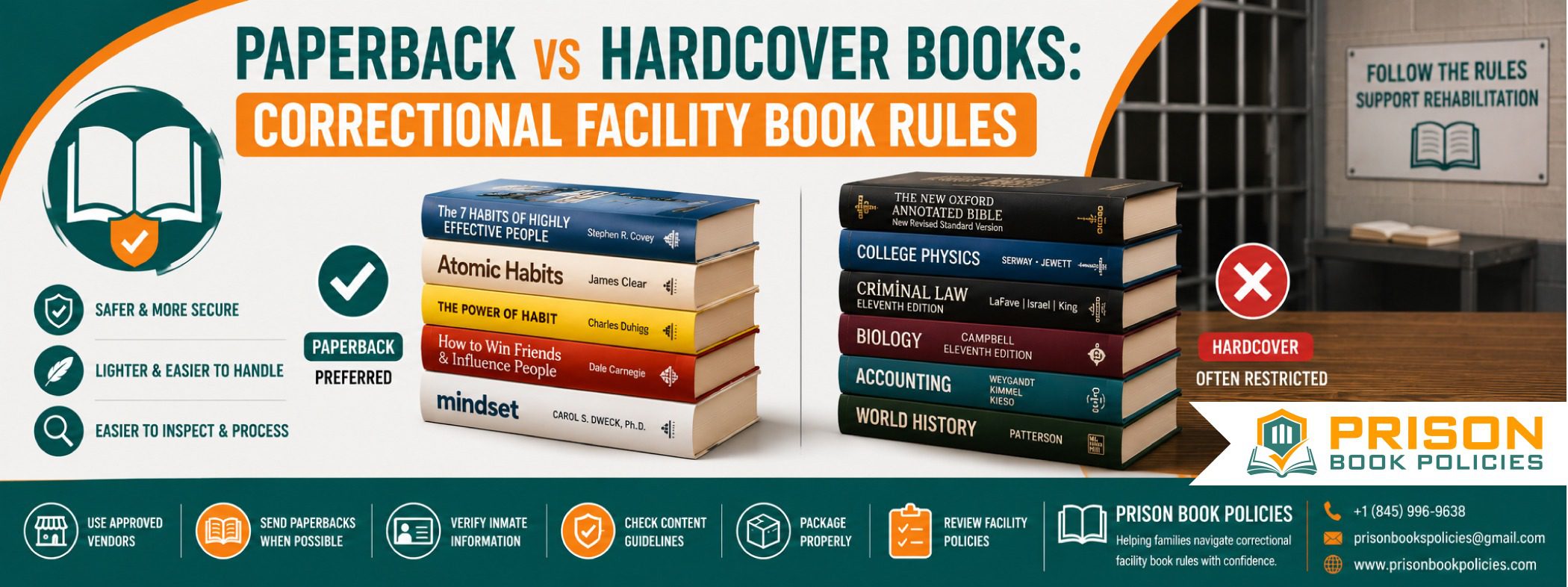
Sending books to incarcerated loved ones can provide education, entertainment, and emotional support. However, understanding correctional facility book rules is essential to ensure that books reach inmates safely and are not rejected by prison mailrooms. One of the most common questions families ask is whether they should send paperback or hardcover books. The answer depends on the security policies of each correctional facility.
At Prison Book Policies, we help families, friends, and approved vendors understand prison mailing regulations across the United States. Our platform provides updated information about inmate mail policies, approved book vendors, publication restrictions, and correctional facility book rules to make the process easier and safer for everyone involved.
This guide explains the differences between paperback and hardcover books, why facilities enforce these rules, and how to comply with correctional facility book rules.
Understanding Correctional Facility Book Rules
Correctional facility book rules are designed to maintain safety, security, and operational efficiency inside prisons and jails. These correctional facility book rules regulate:
- The type of books inmates can receive
- Approved vendors for shipments
- Packaging and labeling requirements
- Content restrictions (e.g., violent, gang-related, or explicit material)
Following these rules is critical for ensuring that books reach inmates without being rejected or returned.
At Prison Book Policies, we regularly monitor correctional facility book rules and provide guidance to help families avoid common mailing mistakes.
Paperback vs Hardcover: What Facilities Prefer
Most correctional facilities prefer paperback books over hardcover books for several important reasons outlined in correctional facility book rules:
1. Security Concerns
Hardcover books can sometimes be altered or hollowed out to hide contraband such as weapons, drugs, or unauthorized notes. Paperback books are more difficult to modify in this way, making them safer for correctional environments.
2. Weight and Size
Paperbacks are lighter and easier for prison mailrooms to inspect, process, and store. Large hardcover books may exceed facility weight or size restrictions established under correctional facility book rules.
3. Safety During Inspection
Paperback books are flexible and less likely to cause injury during inspections. Hardcover books, because of their rigid covers and bindings, may pose safety concerns for correctional staff.
Because of these concerns, many correctional facility book rules specifically prohibit hardcover books unless exceptions are granted for educational or religious purposes.
When Hardcover Books Might Be Allowed
Although paperback books are generally preferred, some facilities may allow hardcover books under limited circumstances according to correctional facility book rules, including:
- Educational materials such as textbooks or study guides
- Religious texts approved by the facility
- Books shipped directly from approved vendors or publishers
Even when hardcover books are permitted, they must still comply with all facility packaging, vendor, and content requirements.
Before placing an order, families should always review the facility’s latest correctional facility book rules or consult resources like Prison Book Policies for updated guidance.
Tips for Sending Books According to Facility Rules
To comply with correctional facility book rules, follow these best practices:
- Use Approved Vendors – Ship books through recognized providers such as SureShot Books Publishing LLC or Corrections BookStore.
- Send Paperbacks When Possible – Paperback editions are more widely accepted and reduce the risk of rejection.
- Verify Inmate Details – Include the inmate’s full legal name, ID number, and correct facility address.
- Check Content Guidelines – Avoid prohibited topics, including explicit language, gang-related material, or illegal activity.
- Package Properly – Ensure books are securely packaged without unauthorized inserts, notes, or personal items.
- Review Facility Policies Regularly – Prison rules can change frequently, so always confirm current correctional facility book rules before sending books.

Why Following Correctional Facility Book Rules Matters
Complying with correctional facility book rules helps ensure:
- Books are delivered safely to inmates
- Packages are not rejected or returned
- Facility security is maintained
- Mailroom processing is faster and more efficient
- Inmates continue receiving educational and recreational materials without interruption
Ignoring correctional facility book rules can result in delays, rejected shipments, or disciplinary issues related to inmate mail privileges.
About Prison Book Policies
Prison Book Policies is an informational resource dedicated to helping families navigate prison mailing regulations. We provide:
- State-by-state prison book policies
- Approved vendor information
- Inmate publication guidelines
- Tips for successful inmate mail delivery
- Educational resources about prison mail procedures
- Updates regarding correctional facility book rules
Our goal is to simplify the process of sending books and publications to inmates while helping families stay compliant with correctional facility regulations.
Contact Prison Book Policies
If you have any queries related to prison book regulations or about our services, feel free to contact us at:
- Phone Number: +1 (845) 996-9638
- Email: prisonbookspolicies@gmail.com
We’re here to serve you.
Final Thoughts
Understanding the difference between paperback and hardcover books is crucial when sending books to inmates. Most correctional facilities prefer paperback books because they are safer, easier to inspect, and less likely to violate security policies outlined in correctional facility book rules.
By following correctional facility book rules, families can improve the chances that their packages are accepted and delivered successfully. Using approved vendors, verifying inmate information, and staying informed about facility regulations are the best ways to ensure smooth delivery.
At Prison Book Policies, we are committed to helping families stay informed and compliant with correctional facility book rules so inmates can continue receiving valuable educational and recreational reading materials.
