

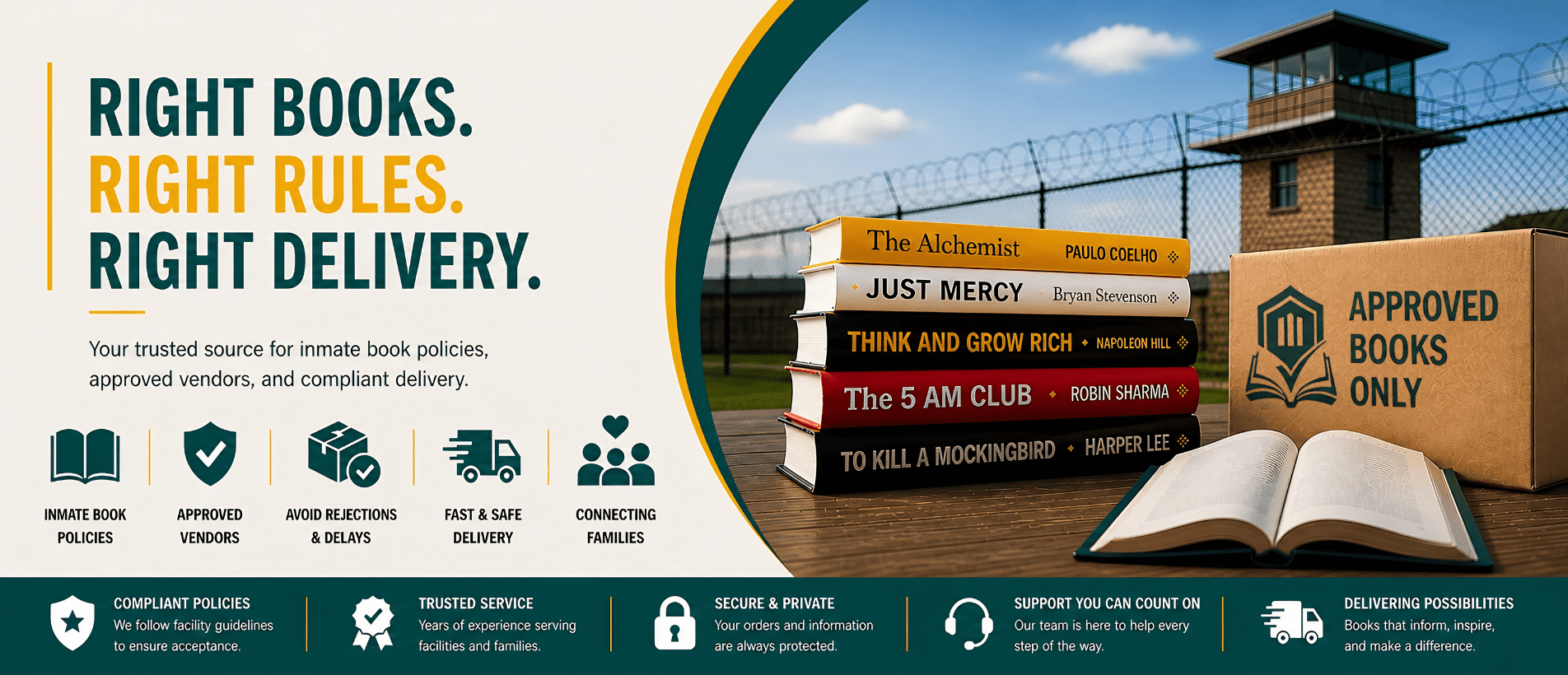
When a loved one is incarcerated, staying connected and providing support can be challenging, especially when it comes to sending books. Prison book rules are often complicated and vary widely from facility to facility. These rules dictate what types of books can be sent, where they can come from, and how they should be packaged. Understanding these rules is essential to ensuring that the books you send will reach their intended recipient.
At Prison Book Policies, we’ve created this comprehensive resource to help families and friends navigate the complexities of prison book rules. This guide will provide you with everything you need to know about sending books to your loved ones in prison, from understanding facility-specific regulations to choosing the right books and vendors.
1. Why Prison Book Rules Matter
Prison book rules are put in place by correctional facilities to maintain security and order. Prisons and jails have strict regulations to ensure that nothing is smuggled in with the books that could threaten safety, from contraband to unauthorized messages. These rules also help maintain fairness in how inmates receive mail and prevent discrimination between inmates.
For families and friends of incarcerated individuals, the key to successfully sending books to inmates is understanding and adhering to prison book rules. Failure to comply with these rules can result in books being rejected, causing unnecessary frustration and delays in your efforts to send support to your loved one.
2. Understanding Facility-Specific Prison Book Rules
One of the most important things to remember when sending books to inmates is that prison book rules vary widely between facilities. What is allowed in one correctional institution may be prohibited in another. It’s essential to familiarize yourself with the specific rules of the facility your loved one is in before sending books.
Common Regulations Across Facilities:
- Approved vendors: Many prisons only accept books from authorized sources, such as specific vendors or bookstores.
- Content restrictions: Explicit content, gang-related material, or books that promote violence are generally prohibited.
- Format requirements: Many facilities only allow paperback books, and hardcover books may be rejected.
- Packaging: Prisons often have rules about how books should be packaged, including whether they need to be new and how they should be sealed.
To avoid mistakes, always check the facility’s guidelines before sending books. If you’re unsure about the rules, you can usually find information online or contact the facility’s mailroom directly.
3. Common Restrictions in Prison Book Rules
Prison book rules are designed to keep the prison environment secure and orderly. As such, there are several common restrictions you should be aware of when choosing the right book for inmates.
3.1 Content Restrictions
Most facilities have strict rules about what types of content can be sent to inmates. While some books are widely accepted, others may be rejected due to their content. Common content restrictions include:
- Sexually explicit material: Pornographic books are generally prohibited.
- Gang-related material: Books that promote gang culture or provide instructions on illegal activities are often banned.
- Violent extremist literature: Books promoting terrorism, violence, or hate speech are usually disallowed.
- Escape plans or illegal activities: Instructional books on criminal activities, such as escape plans, are almost universally prohibited.
When selecting a book, ensure it complies with prison book rules by focusing on educational, spiritual, self-help, and general literature that is aligned with rehabilitative goals.
3.2 Book Format
Most correctional facilities have a paperback-only policy. This rule helps to reduce the risk of books being altered or used to conceal contraband. Hardcover books are typically rejected because they are harder to inspect and may hide dangerous items. Always check the specific rules for the facility your loved one is in to ensure the right book for inmates.
3.3 Approved Vendors
Many prisons only allow books to be sent from approved vendors. Books ordered from unauthorized sources or sent directly by individuals are frequently rejected. Common approved vendors include:
- Bookstores that specialize in inmate shipments.
- Specific online retailers recognized by the correctional facility.
- Publishers or distribution channels that comply with prison regulations.
At Prison Book Policies, we work with trusted approved vendors like SureShot Books Publishing LLC and Corrections BookStore to help ensure that the books you send are compliant with prison book rules.
4. How to Choose the Right Book for Inmates
When selecting a book for an incarcerated loved one, it’s important to consider both the content and the format of the book to ensure it aligns with prison book rules. Here’s how to choose the right book for inmates:
4.1 Educational Books
Books that contribute to an inmate’s education are always encouraged. These include:
- GED study materials and academic textbooks.
- Vocational training books to help inmates learn new skills.
- Language and math books that promote literacy.
4.2 Religious Books
Most correctional institutions allow religious texts, such as:
- The Bible (Christianity)
- The Quran (Islam)
- The Torah (Judaism)
4.3 Self-Help and Personal Growth
Books on personal development, mental health, and addiction recovery are widely accepted. These include:
- Self-help books on anger management, coping skills, and mindfulness.
- Addiction recovery guides and mental health books that promote rehabilitation.
- Life skills books, such as those on financial literacy, communication, or stress management.
4.4 General Literature and Fiction
Many facilities allow general literature, including fiction and non-fiction, as long as the content is appropriate and does not violate prison rules.
5. How to Comply with Prison Book Rules: Tips for Families and Friends
To successfully send books to inmates and ensure that they are accepted, here are some key tips:
- Verify facility rules: Always check with the facility to confirm their specific prison book rules, including content restrictions, book format, and approved vendors.
- Use approved vendors: Choose approved vendors that understand the complexities of prison book rules and can ensure compliance with the facility’s regulations.
- Select appropriate content: Choose books that are educational, spiritual, or self-help focused, avoiding anything that may be considered explicit, violent, or illegal.
- Package books correctly: Ensure books are new, packaged securely, and clearly labeled with the inmate’s information.
6. Using Book Policy Guard to Ensure Compliance
One of the best tools available to ensure you’re following prison book rules is Book Policy Guard. This service helps families and bookstores verify whether a book complies with facility-specific guidelines, including vendor approval, content regulations, and packaging requirements. By using Book Policy Guard, you can minimize the risk of sending non-compliant books and ensure your shipment is accepted by the mailroom.
7. Final Thoughts on Prison Book Rules
Prison book rules are an important aspect of sending support to incarcerated loved ones. By understanding the specific guidelines of the facility where the inmate is located, choosing the right book for inmates, and following packaging and content regulations, you can ensure that your books reach their intended recipient.
At Prison Book Policies, we are committed to providing families and friends with the information and tools they need to navigate the complexities of prison book rules. By using trusted approved vendors and resources like Book Policy Guard, you can make sure that your book shipments comply with correctional facility standards, helping to support inmates in their rehabilitation and personal growth.
Contact Prison Book Policies
If you have any queries related to prison book regulations or about our services, feel free to contact us at:
(—————–)
We’re here to serve you.