

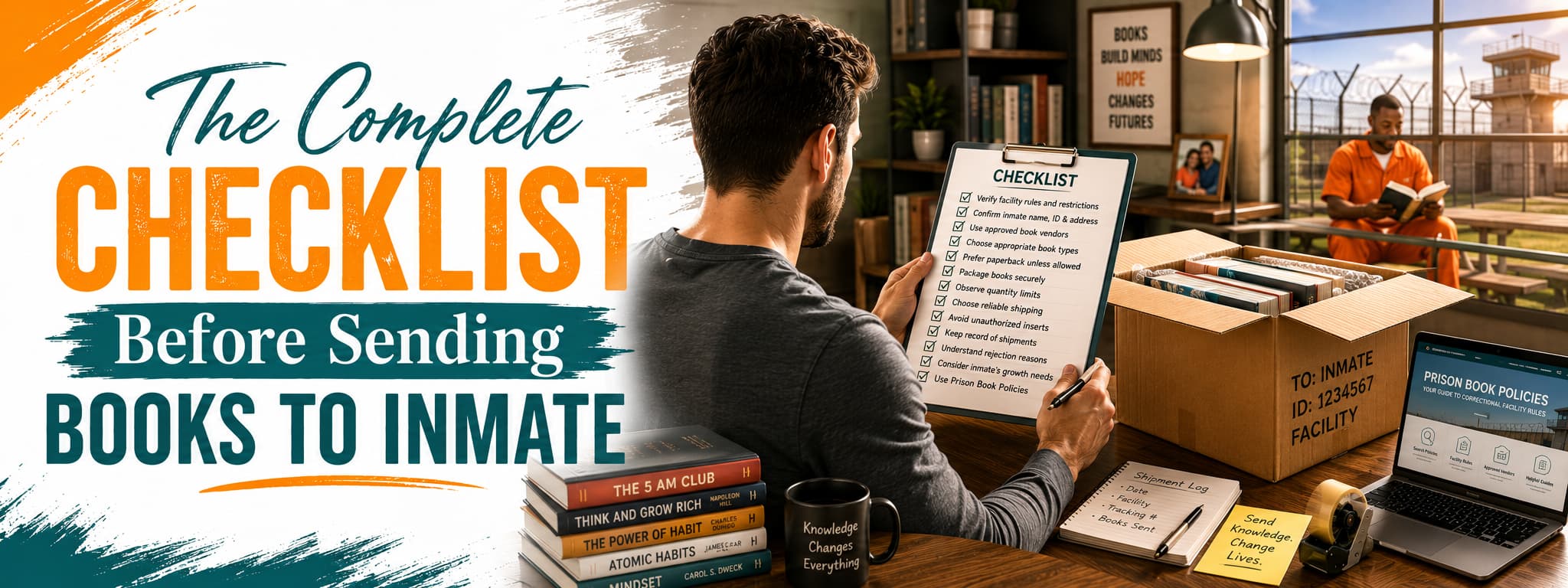

Sending books to incarcerated loved ones is one of the most meaningful ways to support education, personal growth, and mental well-being. However, sending books to inmate requires careful planning to comply with facility rules and ensure that the books reach the recipient safely. Mistakes can lead to rejected packages, delays, or even returned shipments.
This guide from Prison Book Policies provides a comprehensive checklist to follow before sending books to inmate, helping families and friends navigate the rules, choose the right materials, and avoid common pitfalls.
1. Verify Facility Rules
Correctional facilities have unique regulations regarding books. Before sending books to inmate, always:
- Check the facility’s official website for mail and book policies.
- Confirm if books are allowed and whether they must come from approved vendors.
- Review restrictions on content, format, and quantity.
- Note any specific edition requirements for textbooks, religious materials, or vocational guides.
Tip: Facilities may update rules regularly, so verify before every shipment when sending books to inmate.
2. Confirm Inmate Information
Accurate inmate information is critical to avoid rejected shipments. Always include:
- Full legal name of the inmate
- Inmate ID or booking number
- Facility name and address
- Housing unit or cell block if required
Incorrect information is one of the most common reasons sending books to inmate results in returns or delays.
3. Use Approved Vendors
Many correctional facilities only accept books from approved book vendors or publishers. Using recognized vendors is essential when sending books to inmate because it ensures:
- Compliance with facility policies
- Reduced risk of rejected packages
- Proper packaging and labeling
- Accurate shipment tracking
Trusted vendors include SureShot Books, Corrections BookStore, and state-specific correctional bookstores that specialize in sending books to inmate.
4. Choose Appropriate Book Types
Selecting the right materials is important. Choose books that align with facility rules and inmate needs. Common categories include:
- Educational Books: GED prep, vocational training, and academic textbooks
- Religious Books: Approved religious texts such as Bibles, Qurans, and devotionals
- Self-Help Books: Personal development, mental health, and life skills guides
- Fiction & Non-Fiction: General reading material allowed by the facility
- Dictionaries and Language Books: Useful for literacy improvement
Tip: Avoid books with explicit language, gang content, or graphic violence when sending books to inmate.
5. Decide Between Paperback and Hardcover
Most facilities prefer paperback books when sending books to inmate because they are:
- Easier to inspect
- Lighter and easier to store
- Less likely to be altered for contraband
Hardcovers may be allowed in some cases, especially for educational or religious books. Always check the facility rules before sending books to inmate in hardcover format.

6. Prepare Proper Packaging
Proper packaging is essential when sending books to inmate to ensure books survive inspection and mailroom handling:
- Use a sturdy box or envelope
- Avoid excessive packaging that makes inspection difficult
- Ensure books are free from stickers, notes, or other unauthorized inserts
- Include the inmate’s details clearly on the package
Tip: Some vendors handle packaging for you, simplifying the process of sending books to inmate.
7. Check Quantity Limits
Facilities may restrict the number of books an inmate can receive at a time when sending books to inmate:
- Maximum of one to three books per shipment is common
- Approved vendors often manage shipment limits automatically
- Consider sending multiple shipments spaced out over time regularly
8. Review Shipping Options
When sending books to inmate, always:
- Use reliable shipping methods with tracking
- Confirm delivery times and any mailroom processing delays
- Check if the facility provides estimated inspection and delivery periods
Tracking helps families monitor progress when sending books to inmate and reduces uncertainty.
9. Avoid Unauthorized Inserts
When sending books to inmate:
- Letters, notes, gift cards, or bookmarks may not be allowed inside books
- Including unauthorized items can result in rejected books
- Only include items explicitly permitted by the facility
Avoiding these mistakes is key to successful delivery of inmate books.
10. Keep a Record
Keeping records is helpful when sending books to inmate:
- Note the books you are sending, shipping date, and vendor information
- Retain tracking numbers and receipts
- This documentation is helpful if issues arise
11. Understand Rejection Policies
Even when following rules, sended books may still result in rejection due to:
- Books from non-approved vendors
- Prohibited content or formats
- Incorrect inmate information
- Unauthorized inserts or damaged packaging
Understanding these risks improves success when sending books to inmate.

12. Consider Educational Needs
When sending books to inmate, consider:
- Educational goals such as GED or vocational training
- Religious or self-help materials for personal growth
- Recreational reading to reduce stress and improve mental health
Thoughtful selection enhances the impact of books.
13. Use Prison Book Policies Resources
Prison Book Policies provides guidance for every step of sending books to inmate:
- Facility-Specific Rules: Updated mail and book guidelines
- Approved Vendor Lists: Trusted sources for compliant shipments
- Mailing Tips: Best practices to prevent rejection and delays
- Content Guidance: Recommendations for allowed educational and recreational books
- Educational Resources: Suggestions for GED, vocational, and personal development books
Using these tools simplifies the process and improves delivery success.
Summary Checklist Before Sending Books to Inmate
- Verify facility rules and restrictions before sending books to prisoners
- Confirm inmate full legal name, ID, and facility address
- Use approved book vendors
- Choose appropriate book types
- Prefer paperback books unless hardcover is allowed
- Package books securely and properly label them
- Observe quantity limits per shipment
- Choose reliable shipping with tracking
- Avoid unauthorized inserts
- Keep a record of shipments and tracking numbers
- Understand potential rejection reasons
- Consider the inmate’s educational and personal growth needs
- Utilize resources from Prison Book Policies to check correctional facility policies
Contact Prison Book Policies
If you have any queries related to prison book regulations or about our services, feel free to contact us at:
- Phone Number: +1 (845) 996-9638
- Email: prisonbookspolicies@gmail.com
We’re here to serve you.
Final Thoughts
Sending books to inmate requires careful planning, attention to facility rules, and the use of approved vendors. Following this comprehensive checklist helps families reduce the risk of rejected shipments, delays, and frustration. By choosing appropriate books, packaging them correctly, and using resources like Prison Book Policies, families can ensure that their efforts in sending books to their loved ones provide educational, recreational, and personal growth benefits.
Providing books safely and compliantly through sending books to inmate supports literacy, rehabilitation, and mental well-being, making a positive impact on an inmate’s life.
