



Sending books to inmates is an act of support that can provide emotional comfort, educational resources, and personal growth opportunities. However, the process of sending books to inmates can be more complicated than simply picking a book and mailing it. Correctional facilities have specific rules and regulations that must be followed, and failing to adhere to them can result in book shipments being rejected or delayed.
In this blog, we’ll highlight some of the most common mistakes people make when sending books to inmates and provide practical tips on how to avoid them. By following these guidelines, you can ensure that your books reach the inmate successfully and without complications.
1. Not Checking Facility-Specific Rules
One of the most common mistakes people make when sending books to inmates is failing to check the specific rules of the facility where the inmate is located. Every prison or jail has its own set of policies governing what types of books are allowed, how they should be packaged, and where they must come from.
Common Mistakes:
- Not verifying if the facility allows paperback books only.
- Sending books from unapproved vendors.
- Ignoring the facility’s restrictions on content.
How to Avoid It:
Before sending books to inmates, always verify the facility’s rules. Many prisons and jails post their mail policies online, which will outline the types of books they accept, the approved vendors, and any specific content restrictions. If the information isn’t readily available, you can always contact the facility’s mailroom directly to ask for their specific guidelines.
2. Sending Hardcover Books When Only Paperbacks Are Allowed
Many correctional facilities have a paperback-only policy for incoming books. This is because hardcovers are considered harder to inspect and could potentially be used to hide contraband. Sending a hardcover book to a facility that only accepts paperbacks is a surefire way to have your shipment rejected.
Common Mistakes:
- Not checking the facility’s policy on book formats.
- Sending a hardcover book despite knowing the restriction.
How to Avoid It:
Before sending books to inmates, check whether the facility allows hardcover books. If they don’t, always choose paperback books. Some facilities make exceptions for educational or religious materials, so verify the specific details if you are sending a book in these categories.
3. Ignoring Approved Vendors Requirements
Another critical mistake when sending books to inmates is using unapproved vendors. Most correctional facilities require that books come from approved bookstores or vendors. Sending books from unauthorized sources can lead to immediate rejection, and your package may be returned or destroyed.
Common Mistakes:
- Using online stores that are not on the approved list.
- Mailing books directly from individuals or non-licensed sellers.
How to Avoid It:
To ensure your shipment is compliant, always send books through approved vendors. Many correctional institutions only accept books from specific sources, such as recognized publishers, certain bookstores, or online vendors with approval. At Prison Book Policies, we work with trusted approved vendors like SureShot Books Publishing LLC and Corrections BookStore, which understand the nuances of prison book policies. If you’re unsure, confirm with the facility’s mailroom or use a service like Book Policy Guard to verify compliance.
4. Failing to Package Books Correctly
Incorrect packaging is one of the leading reasons why sending books to inmates results in rejection. Correctional facilities have specific guidelines for how books must be packaged to ensure they are not tampered with and that they meet security standards. Failing to follow these guidelines can delay delivery or lead to the return of your shipment.
Common Mistakes:
- Using flimsy or unsealed packaging.
- Adding personal notes, stickers, or bookmarks to the package.
- Not properly labeling the book with the inmate’s full name and ID number.
How to Avoid It:
When sending books to inmates, follow the facility’s packaging rules carefully. Use sturdy packaging, such as padded envelopes or boxes, to protect the books during shipping. Avoid including any personal items like notes, pictures, or bookmarks, as these could be considered contraband. Be sure to clearly label the package with the inmate’s full name, ID number, and the correct facility address. Some facilities may also require that books be sent directly from the vendor in sealed packaging to prevent tampering.
5. Sending Prohibited Content
Another mistake is not understanding the types of content that are prohibited in prison. Many facilities have strict rules regarding what types of books can be sent. Books with inappropriate or explicit content, such as pornography, gang-related material, or violent extremist literature, will be rejected.
Common Mistakes:
- Sending books with sexually explicit material or violence.
- Not checking if the book promotes extremist ideologies or gangs.
- Sending books with controversial themes that violate prison security rules.
How to Avoid It:
Before sending books to inmates, review the facility’s content restrictions. Most prisons prohibit books that:
- Contain explicit sexual content or pornography.
- Promote violence, terrorism, or gang-related activities.
- Include instructional material on illegal activities (e.g., escape plans or drug manufacturing guides).
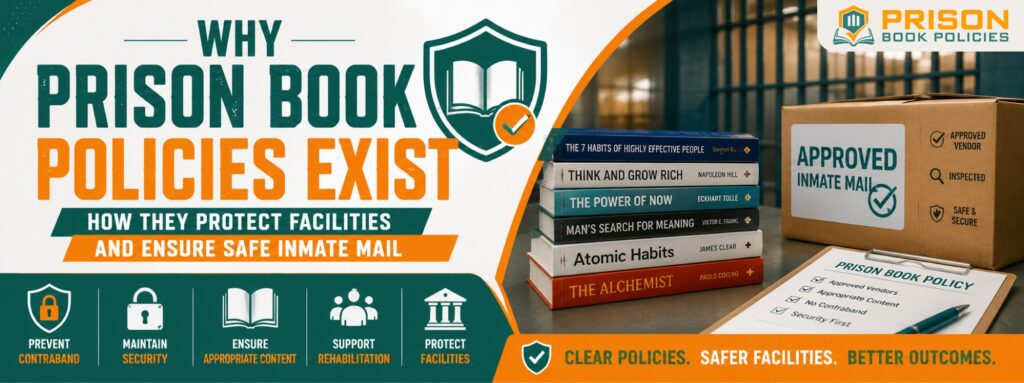
Choose books that align with the facility’s educational, rehabilitative, and spiritual goals. Educational books, religious texts, self-help books, and general literature are generally accepted, while books with violent or explicit content are typically rejected.
6. Sending Too Many Books at Once
Some correctional facilities have strict quantity limits on the number of books an inmate can receive at one time. Sending too many books in one shipment can lead to part of the package being rejected or returned.
Common Mistakes:
- Sending more books than the facility’s limit.
- Not breaking up shipments when sending multiple books.
How to Avoid It:
Check the book quantity limits at the facility where the inmate is housed. Some facilities allow only a certain number of books at a time, typically 3 to 5, while others may have more restrictive limits. If you’re sending multiple books, consider breaking up the shipment into smaller packages that comply with the facility’s limits.
7. Overlooking the Need for Up-to-Date Information
Correctional facility policies can change, and what was allowed one month may no longer be permissible the next. One mistake people often make when sending books to inmates is relying on outdated information about what is allowed.
Common Mistakes:
- Using old information about vendor approval or facility rules.
- Not checking for updates to the prison’s book policies.
How to Avoid It:
Always stay up to date with the correctional facility’s rules. Even if you’ve successfully sent books before, it’s important to verify the current policies each time you send a new package. Use resources like Prison Book Policies or Book Policy Guard to ensure you have the latest information about approved vendors, book content, and facility regulations.
8. Not Confirming Delivery or Address Issues
Another mistake when sending books to inmates is not following up to confirm whether the book was successfully delivered. Even if a package is sent according to the rules, issues can arise with delivery or mailroom processing.
Common Mistakes:
- Not checking whether the inmate received the book.
- Assuming the book has been delivered without confirming.
How to Avoid It:
After sending books to inmates, confirm with the facility’s mailroom or check with the inmate (if possible) to ensure the book has arrived. Some facilities provide tracking for book shipments, so you can stay informed on the status of the delivery.
Contact Prison Book Policies
If you have any queries related to prison book regulations or about our services, feel free to contact us at:
- Phone Number: +1 (845) 996-9638
- Email: prisonbookspolicies@gmail.com
We’re here to serve you.
Final Thoughts on Sending Books to Inmates
Sending books to inmates can be a rewarding way to support incarcerated individuals, but it’s important to follow the rules and avoid common mistakes. By understanding the specific guidelines for sending books to inmates, checking facility policies, using approved vendors, ensuring proper packaging, and adhering to content restrictions, you can help ensure that your books reach their intended recipients.
At Prison Book Policies, we work with trusted approved vendors like SureShot Books Publishing LLC and Corrections BookStore to help you navigate the complexities of prison book policies and ensure that your book shipments comply with correctional regulations. Using resources like Book Policy Guard can further minimize mistakes and ensure compliance.
By following these guidelines, you can support inmate education and rehabilitation while avoiding the frustrations of rejected shipments.