

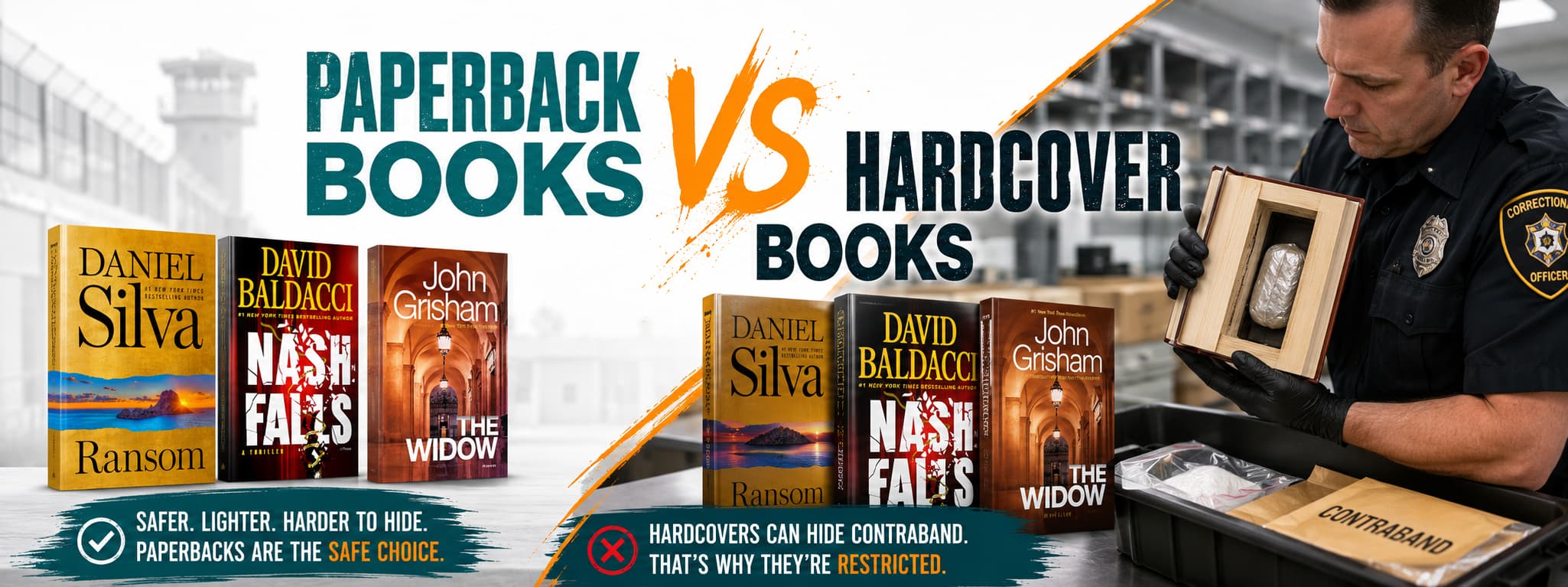

Sending reading material to inmates is an important way to support education, rehabilitation, and personal growth. However, not all correctional facilities handle books the same way. One of the most common questions families have is about the differences between paperback books and hardcover books, and why some facilities accept one while rejecting the other.
This guide from Prison Book Policies explores the reasons behind these rules, the benefits and risks of paperback books, and tips for sending books safely and compliantly to inmates.
Why Correctional Facilities Have Different Rules for Books
Correctional facilities maintain strict guidelines for incoming books to protect security and ensure fair access to all inmates. The rules vary based on several factors:
1. Security Considerations
- Hardcover books can be hollowed out or altered to hide contraband like weapons or drugs.
- Paperback books are less rigid and harder to tamper with.
- Facilities prioritize safety, which is why they often favor paperback books over hardcover editions.
2. Inmate Population and Facility Type
- Maximum-security facilities tend to have stricter restrictions compared to minimum-security or reentry centers.
- Juvenile facilities may allow only educational or age-appropriate paperback books.
- Female and male facilities may have slightly different rules based on behavior and safety concerns.
3. Administrative Policies
- Each correctional facility’s administration sets its own rules for books.
- Past incidents, staffing resources, and state regulations can influence these rules.
- Some facilities permit hardcover books for educational or religious purposes, but paperback books are generally preferred for everyday reading.
4. Mailroom Efficiency
- Paperback books are lighter and easier for staff to inspect, sort, and deliver.
- Hardcovers can be heavier, harder to store, and more challenging to process.
- Policies often reflect the facility’s capacity to handle large volumes of mail efficiently.

Advantages of Paperback Books in Correctional Facilities
Paperback books are widely accepted due to their safety, practicality, and accessibility. Here are some key benefits:
- Safer Handling: Lightweight and flexible, reducing the risk of injury to mailroom staff.
- Security Compliance: Less likely to be altered or used to conceal contraband.
- Cost-Effective: Often cheaper than hardcover editions, making it easier for families to send multiple paperback books.
- Easier Storage: Fit better in mailroom shelves and inmate property storage.
- Higher Acceptance Rate: Most correctional facilities have a higher acceptance rate for paperback books.
When Hardcover Books Are Allowed
Some facilities allow hardcover books under specific conditions:
- Educational Use: Textbooks or academic materials may be approved even if hardcover.
- Religious Materials: Certain religious texts may be permitted in hardcover.
- Approved Vendors: If shipped directly from a recognized vendor familiar with prison rules.
Always verify facility-specific rules before sending hardcover books, as regulations differ widely.
Common Reasons Books Are Rejected
Understanding why books are rejected helps families prevent issues. Common reasons include:
- Non-Approved Vendors: Many facilities only accept books from approved bookstores or publishers.
- Prohibited Content: Violent, explicit, or gang-related material is rejected.
- Incorrect Inmate Information: Missing or inaccurate name, ID number, or facility address.
- Unauthorized Inserts: Notes, letters, or stickers inside books can trigger rejection.
- Hardcover Books: Rejected if the facility does not allow them.
- Damaged Books: Torn, water-damaged, or improperly packaged books are often denied.
Tips for Sending Paperback Books Safely
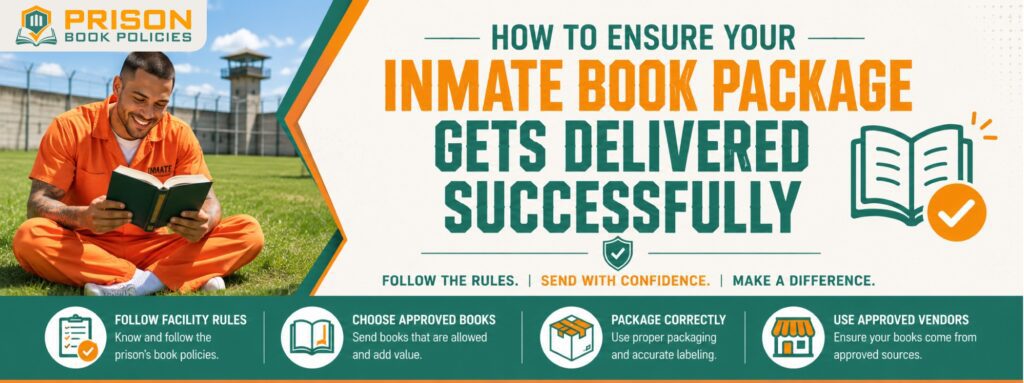
To maximize the chances that paperback books reach inmates, follow these best practices:
1. Use Approved Vendors
- Purchase paperback books from vendors recognized by the correctional facility like SureShot Books or Corrections BookStore.
- Examples include SureShot Books, Corrections BookStore, and state-specific correctional bookstores.
2. Verify Inmate Information
- Include the inmate’s full legal name, ID number, and facility address.
- Confirm details with the facility to avoid returned packages.
3. Choose Appropriate Books
- Stick to educational, religious, or approved recreational paperback books.
- Avoid prohibited content such as graphic violence, sexually explicit material, or gang references.
4. Check Facility Rules for Hardcover Exceptions
- If sending hardcover books, confirm whether the facility allows them for educational or religious purposes.
- Use only vendor-approved hardcover books if permitted.
5. Proper Packaging
- Use sturdy packaging to prevent damage during transit and inspection.
- Avoid including unauthorized letters or personal notes unless the facility explicitly allows it.
6. Track Your Shipment
- Tracking provides confirmation that the books reached the prison mailroom.
- It helps families follow up in case of delays or issues.
Benefits of Following Correctional Facility Book Rules
Adhering to the rules for paperback books offers several advantages:
- Ensures paperback books are delivered safely and on time
- Reduces the likelihood of rejected books
- Supports inmate education, literacy, and personal development
- Maintains good communication and trust between families and prison staff
- Promotes fair access to reading materials for all inmates
Services and Resources from Prison Book Policies
Prison Book Policies is a comprehensive platform for families sending books to inmates. Our services include:
- Facility-Specific Guidelines: Up-to-date rules for sending books to correctional facilities.
- Approved Vendor Lists: Trusted sources for paperback books and other approved materials.
- Content Guidance: Recommendations on acceptable educational, religious, and recreational books.
- Mailing Tips: Practical advice to avoid rejected books and delays.
- Educational Resources: Guidance for books supporting literacy, vocational training, and self-improvement.
These resources help families navigate prison book policies efficiently and ensure their packages reach inmates successfully.
Contact Prison Book Policies
If you have any queries related to prison book regulations or about our services, feel free to contact us at:
- Phone Number: +1 (845) 996-9638
- Email: prisonbookspolicies@gmail.com
We’re here to serve you.
Final Thoughts
Paperback books are generally preferred by correctional facilities due to safety, security, and ease of handling. Hardcover books may be allowed in certain circumstances, such as for educational or religious purposes. Understanding the rules, using approved vendors, verifying inmate information, and following facility-specific guidelines increases the likelihood that paperback books reach inmates without delay.
At Prison Book Policies, we provide families with updated policies, vendor recommendations, and best practices to ensure that paperback books and other approved reading materials reach inmates safely. Following these guidelines allows families to support inmates’ education, personal growth, and rehabilitation effectively.
