

Choosing the right book for inmates is an important and thoughtful way to support incarcerated individuals. Books provide inmates with a source of education, a way to stay connected with the world outside, and opportunities for personal growth. However, the process of sending the right book for inmates is not as straightforward as picking a title and mailing it. Every correctional facility has specific policies, and understanding these policies is essential to ensure the book reaches the inmate successfully.
In this guide by Prison Book Policies, we’ll explore how to choose the right book for inmates, what categories of books are typically approved by prisons, and the key factors that ensure compliance with correctional facility rules.
1. Understanding Prison Book Policies
Before choosing the right book for inmates, it’s crucial to understand prison book policies. Every correctional facility has its own set of guidelines on what types of books are allowed. Some facilities allow a wide range of books, while others are more restrictive. Typically, the right book for inmates must meet specific content, format, and packaging requirements.
Common Restrictions Include:
- Content limitations: Explicit, violent, or extremist materials are often banned.
- Format restrictions: Many prisons only accept paperback books, rejecting hardcovers.
- Vendor requirements: Some facilities will only accept books from approved vendors, making it critical to choose the right book for inmates through recognized channels.
- Packaging guidelines: Many facilities require books to be sent in specific packaging to prevent tampering or damage.
It’s essential to check with the facility’s mailroom to ensure the right book for inmates meets their criteria. By doing so, you can avoid the frustration of having a book shipment returned or rejected.
2. Approved Categories of Books for Inmates
To increase the likelihood that the right book for inmates is accepted, it’s important to choose books from approved categories. Here are some types of books that are generally allowed in most prisons:
2.1 Educational Books
The right book for inmates often includes materials that promote education and personal development. Educational books are among the most widely accepted types of books, as they help inmates improve their literacy, prepare for exams, and learn new skills.
Examples of educational books include:
- GED study guides and textbooks for academic courses.
- Vocational training materials.
- Math, science, and language textbooks.
Educational books are beneficial for inmates who are working towards their GED, college degree, or vocational training, and they are highly encouraged by correctional institutions.
2.2 Religious Books
Many inmates find comfort and solace in religious books, and most facilities permit religious texts as the right book for inmates. These books provide emotional support and spiritual guidance.
Commonly allowed religious books include:
- The Bible (Christianity)
- The Quran (Islam)
- The Torah (Judaism)
- Bhagavad Gita (Hinduism)
Some facilities may restrict the publisher of religious texts, so it’s important to ensure the right book for inmates meets the required standards.
2.3 Self-Help and Personal Development Books
Another category of right book for inmates is self-help and personal development books. These books help inmates build essential life skills, address mental health issues, and work on personal growth. Self-help books are often seen as a key tool for rehabilitation.
Examples include:
- Anger management and conflict resolution guides.
- Addiction recovery books.
- Mental health books addressing anxiety, depression, and mindfulness.
- Life skills books, such as those teaching financial literacy or communication skills.
The right book for inmates in this category can be life-changing, offering the tools needed for positive behavior change.
2.4 Legal Books
For inmates working on their cases, legal books are often essential. The right book for inmates may include:
- Legal reference books on criminal law, civil rights, or case law.
- Self-help legal guides for representing oneself in court.
- Law dictionaries and guides to understanding legal terminology.
Many prisons offer law libraries for inmates to access, but legal books from approved vendors are often accepted for inmates working on their cases or seeking legal knowledge.
2.5 General Literature and Fiction
The right book for inmates can also include general literature and fiction. Books in this category offer inmates a healthy escape and a way to engage their minds. Most correctional facilities accept novels, short stories, biographies, and poetry.
Books in this category include:
- Novels across a range of genres (mystery, historical fiction, etc.).
- Short story collections.
- Biographies and memoirs.
- Poetry books.
However, it’s important to ensure that the right book for inmates does not contain explicit or inappropriate content. Many prisons restrict graphic violence, sexually explicit material, and materials that could disrupt institutional order.
2.6 Hobby and Vocational Books
Books related to hobbies and vocational training can also be the right book for inmates. Many correctional facilities encourage inmates to develop new skills that can help them once they’re released. Books in this category may include:
- Gardening books.
- DIY and craft books.
- Art instruction books.
- Cookbooks.
Hobby and vocational books help inmates pass time productively and acquire skills they can use in their post-incarceration life.
3. Books That Are Often Rejected
While many types of books are accepted, some are frequently rejected for violating prison book policies. Commonly rejected books include:
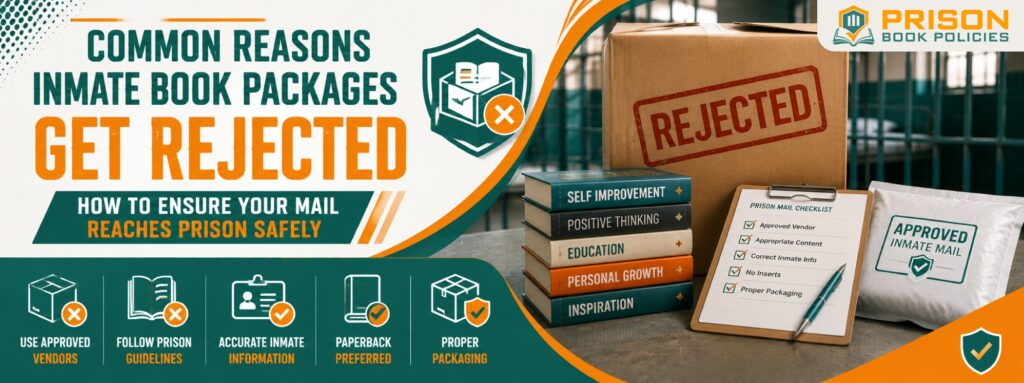
- Hardcover books (as many facilities only accept paperback).
- Explicit content (pornography or sexually explicit books).
- Books promoting violence or extremism (gang-related, terrorist material).
- Books with security concerns (hidden compartments, glued bindings).
The right book for inmates will avoid these issues by staying within approved content guidelines and following packaging protocols.
4. Why Choose Approved Vendors for Sending Books
Choosing the right book for inmates is just part of the process, it’s equally important to select an approved vendor. Many correctional facilities require books to come from approved vendors to ensure compliance with prison regulations. Approved vendors understand the rules of correctional facilities and ensure that all books are properly packaged, labeled, and meet content guidelines.
Why choosing an approved vendor is crucial:
- Compliance with facility rules: Approved vendors are familiar with the content, packaging, and formatting rules for various correctional facilities, ensuring that the right book for inmates meets the facility’s standards.
- Reduced risk of rejection: Sending books through approved vendors minimizes the risk of your shipment being rejected by the mailroom.
- Faster delivery: Approved vendors have established relationships with correctional facilities, ensuring smoother processing and faster delivery of books.
At Prison Book Policies, we work with trusted approved vendors like SureShot Books Publishing LLC and Corrections BookStore, who specialize in ensuring the right book for inmates gets to its destination without any issues. By choosing a vendor that is familiar with correctional policies, you make sure that your book shipment is compliant and reaches the inmate successfully.
5. Using Book Policy Guard for Compliance
One way to ensure you’re selecting the right book for inmates is by using Book Policy Guard. This tool helps users verify whether a book complies with the policies of specific correctional facilities. With Book Policy Guard, you can:
- Check whether the right book for inmates meets the facility’s content restrictions.
- Confirm if the book is packaged and labeled correctly.
- Identify whether the book is being sent from an approved vendor.
By using tools like Book Policy Guard, you can make sure your book complies with the latest prison book policies, reducing the likelihood of your shipment being rejected.
Contact Prison Book Policies
If you have any queries related to prison book regulations or about our services, feel free to contact us at:
- Phone Number: +1 (845) 996-9638
- Email: prisonbookspolicies@gmail.com
We’re here to serve you.
Final Thoughts on Choosing the Right Book for Inmates
Choosing the right book for inmates requires knowledge of prison book policies and an understanding of the types of books most correctional facilities approve. By selecting books from the right categories, using approved vendors, and ensuring proper packaging, you can help ensure that your books are accepted and delivered to the inmate without issue.
At Prison Book Policies, we assist families and vendors in navigating the complexities of prison book policies. By following these guidelines and using trusted vendors, you can provide inmates with valuable resources for education, personal growth, and rehabilitation.